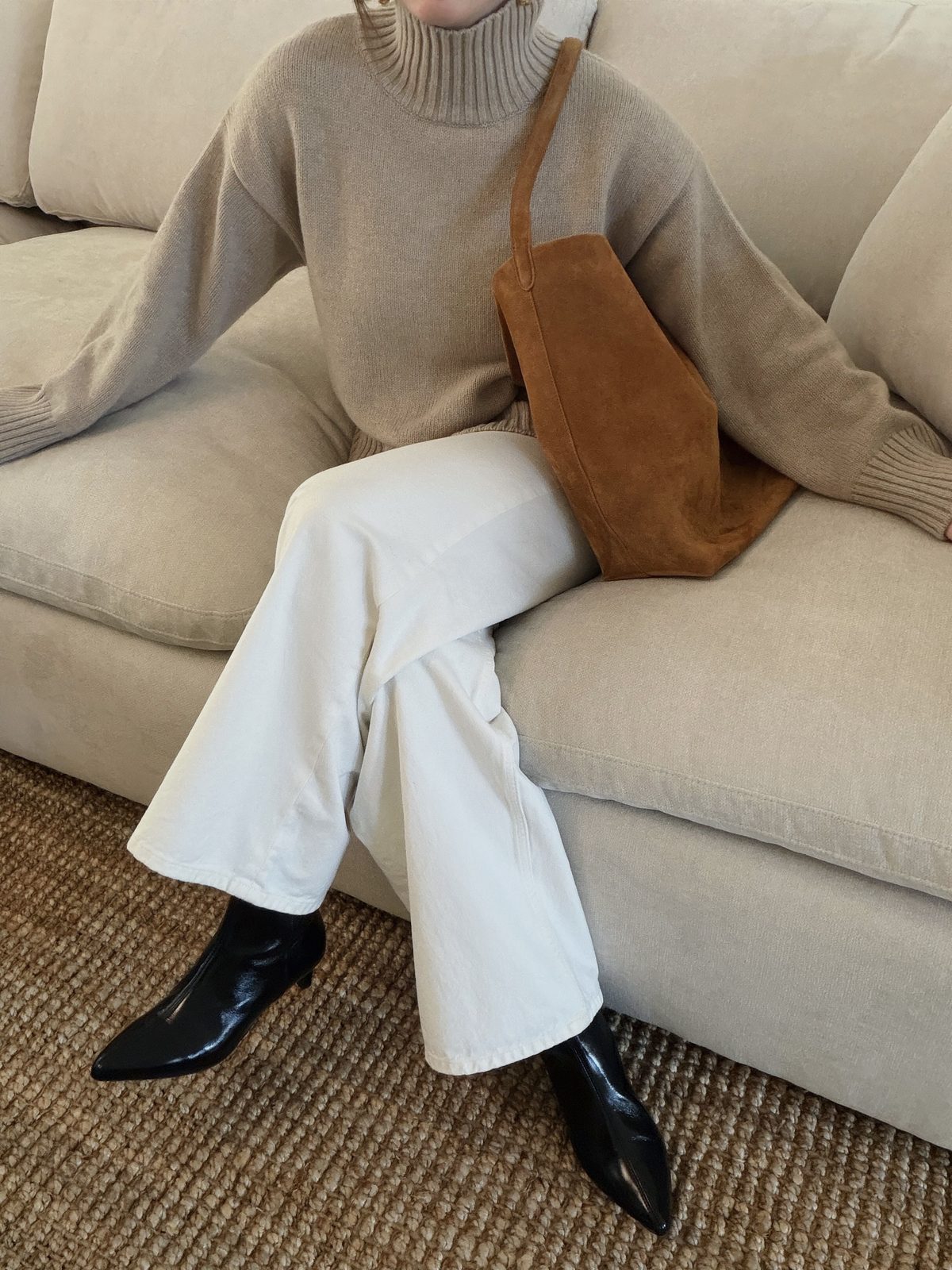
Womens high rise jeans are easiest to sort by waist placement, leg shape, and where the waistband meets your favorite top. This edit compares tapered, straight, wide-leg, bootcut, and flared options so you can decide how much volume feels right.
Womens high rise jeans: A waist-first fit check
Womens high rise jeans are easiest to sort by waist placement, leg shape, and where the waistband meets your favorite top.
Denim finds a new frame
Vogue's account of 1970s fashion gives denim a cultural frame: in 1973, Neiman Marcus named Levi Strauss the single most important American contribution to worldwide fashion, and designer labels soon joined denim's story. That history makes me think about a high rise as a question of proportion rather than a decade costume. The waistband sets the balance for a tucked shirt, a cropped knit, or a longer jacket. For womens high rise jeans, the useful choice is the waist-to-leg relationship that feels right through an ordinary day.
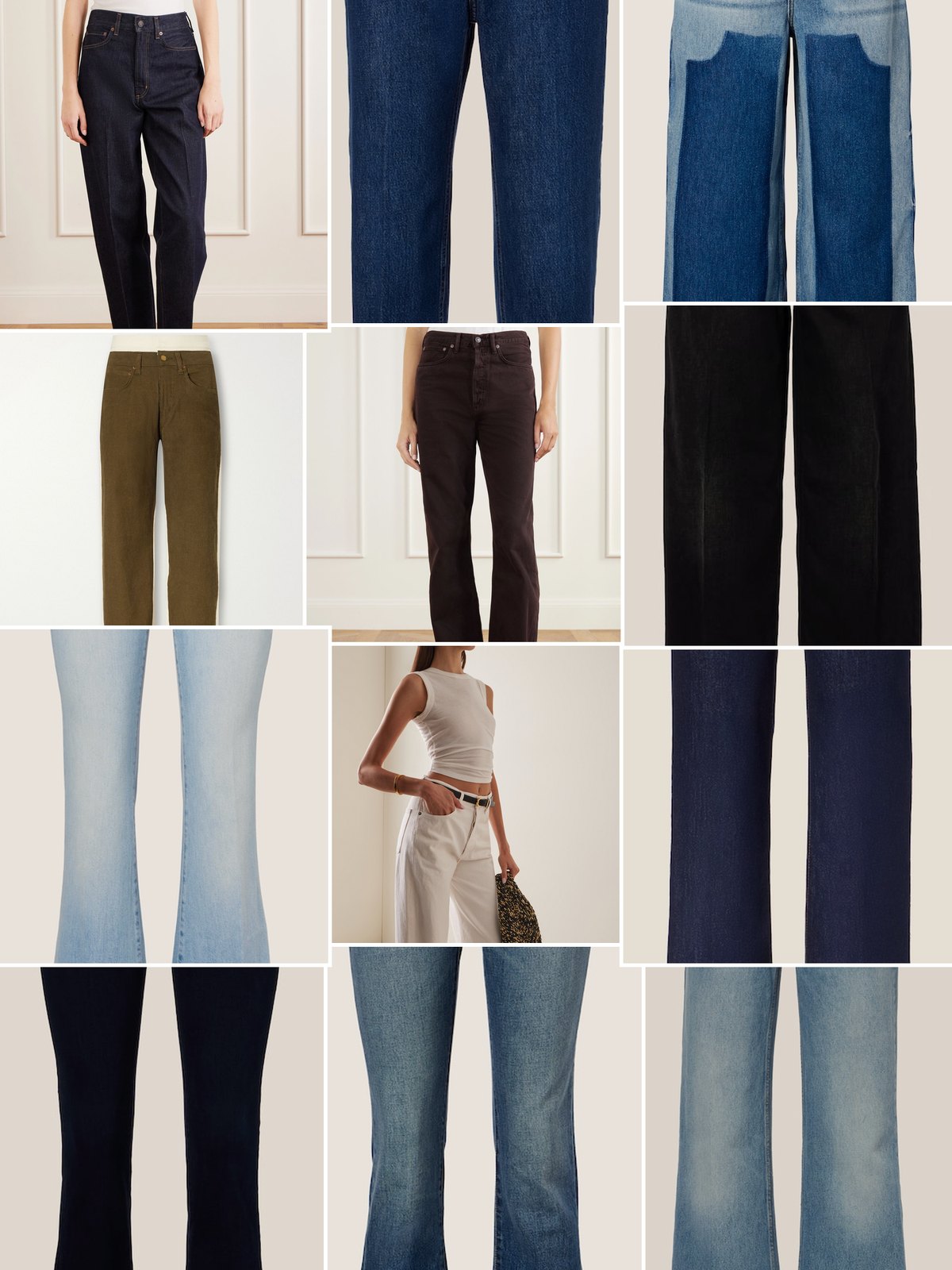
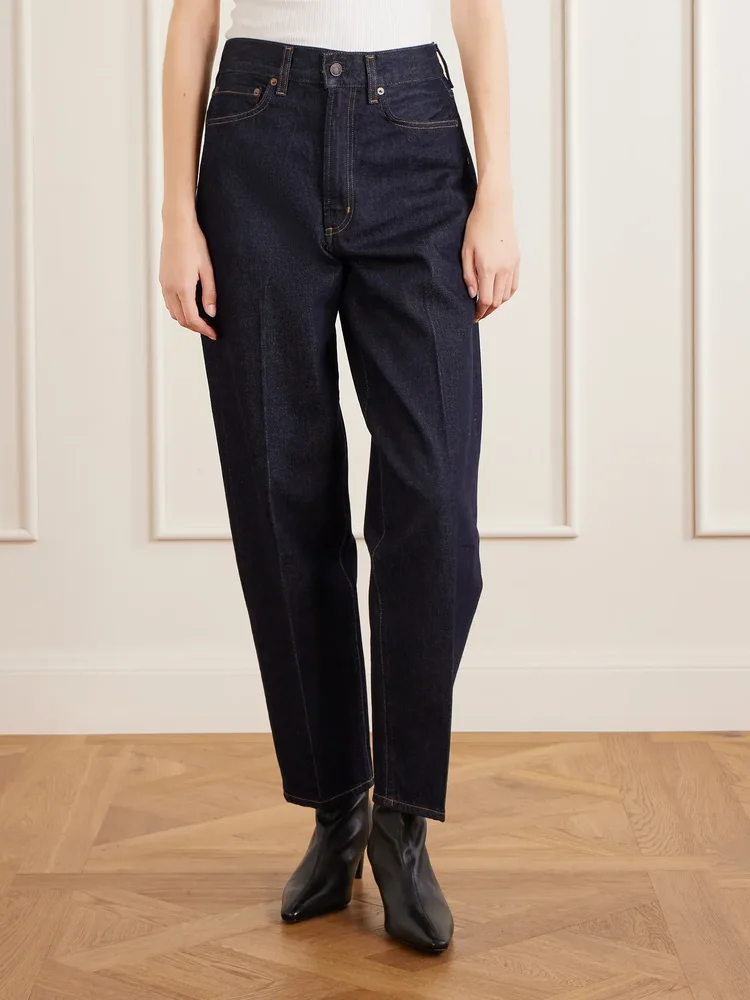
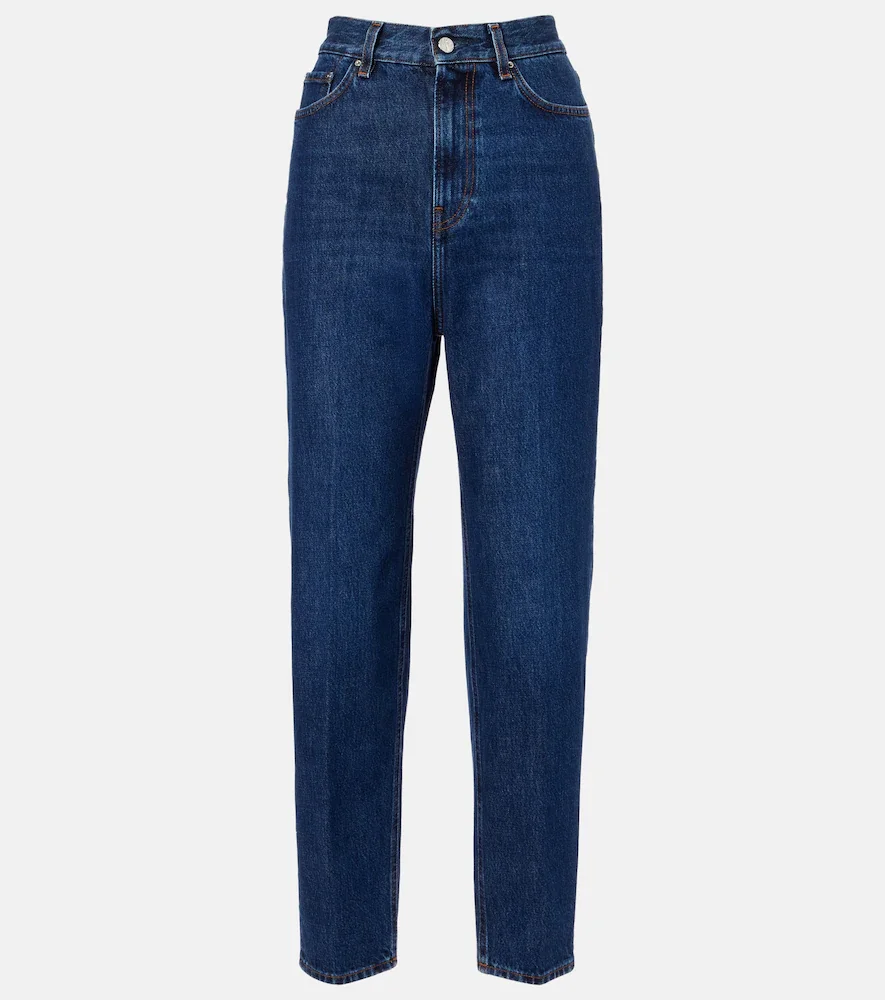
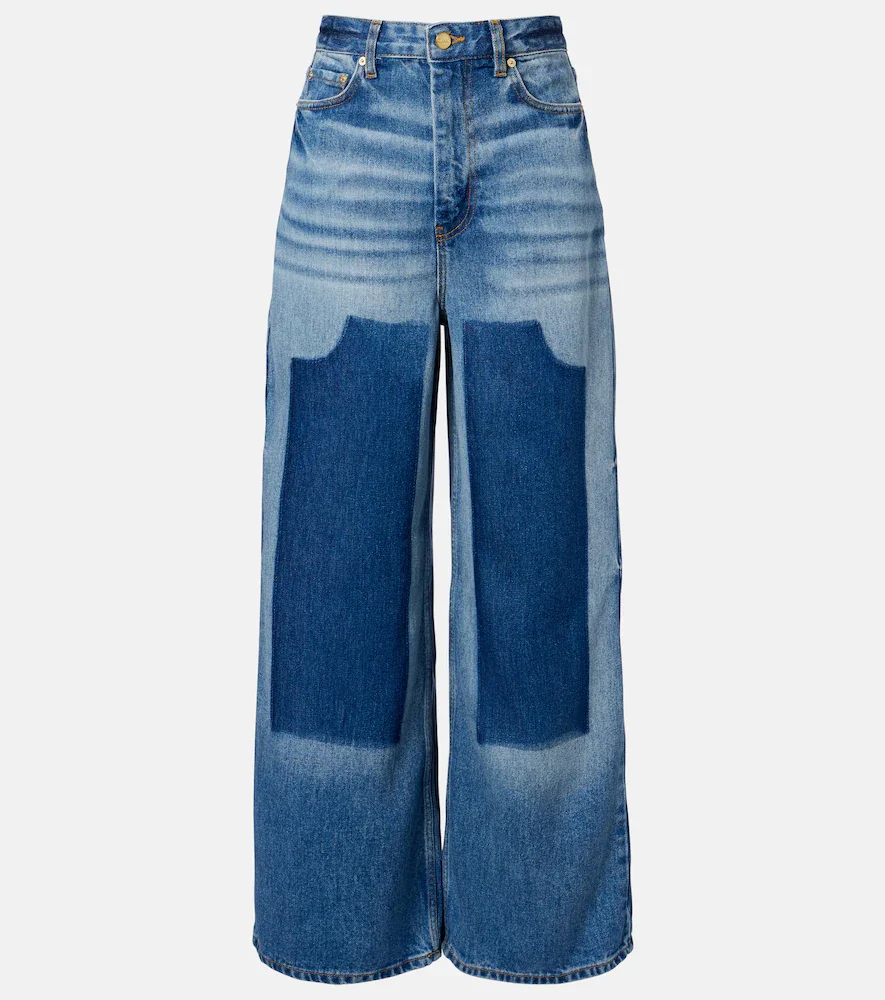
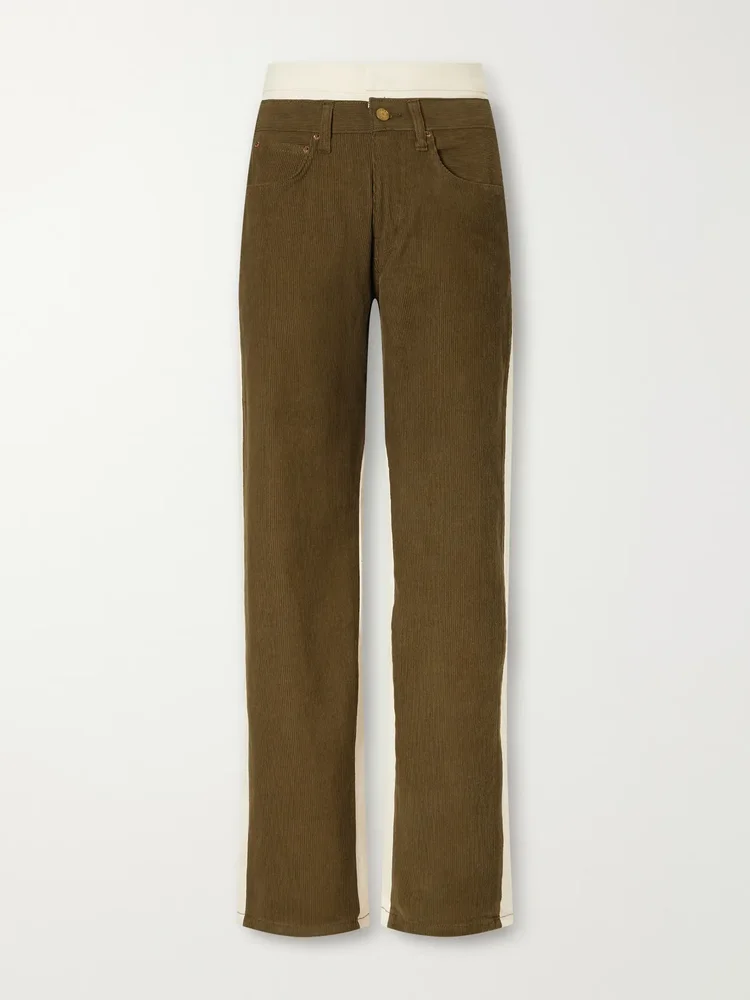
AGOLDE's own about page says its design collective looks to classic silhouettes and reinterprets them in a modern way. AGOLDE 80's high-rise tapered jeans give that idea a narrow starting point, while Toteme High-rise tapered jeans offer another take on the taper. Ganni High-rise wide-leg jeans change the volume below the waist, and B SIDES Double Waistband Rework cotton corduroy high rise wide leg jeans make both the waistband and the corduroy part of the outfit. I would test the rise with a shirt tucked in, then untucked, before deciding which line feels most like you. The shoe is part of that proportion, too.
How much room below
The second group is a small study in how the same high waist can lead to different leg shapes. AGOLDE Vintage Loose high-rise straight-leg jeans combine a loose description with a straight finish, while Toteme High-rise wide-leg jeans put the width lower down. AG Jeans Tropea high-rise flared jeans introduce a flare, and Agolde Ren Rigid High-Rise Straight-Leg Jeans return to a straighter outline with rigid in the name. Read those details as distinct possibilities, not four versions of one fit.
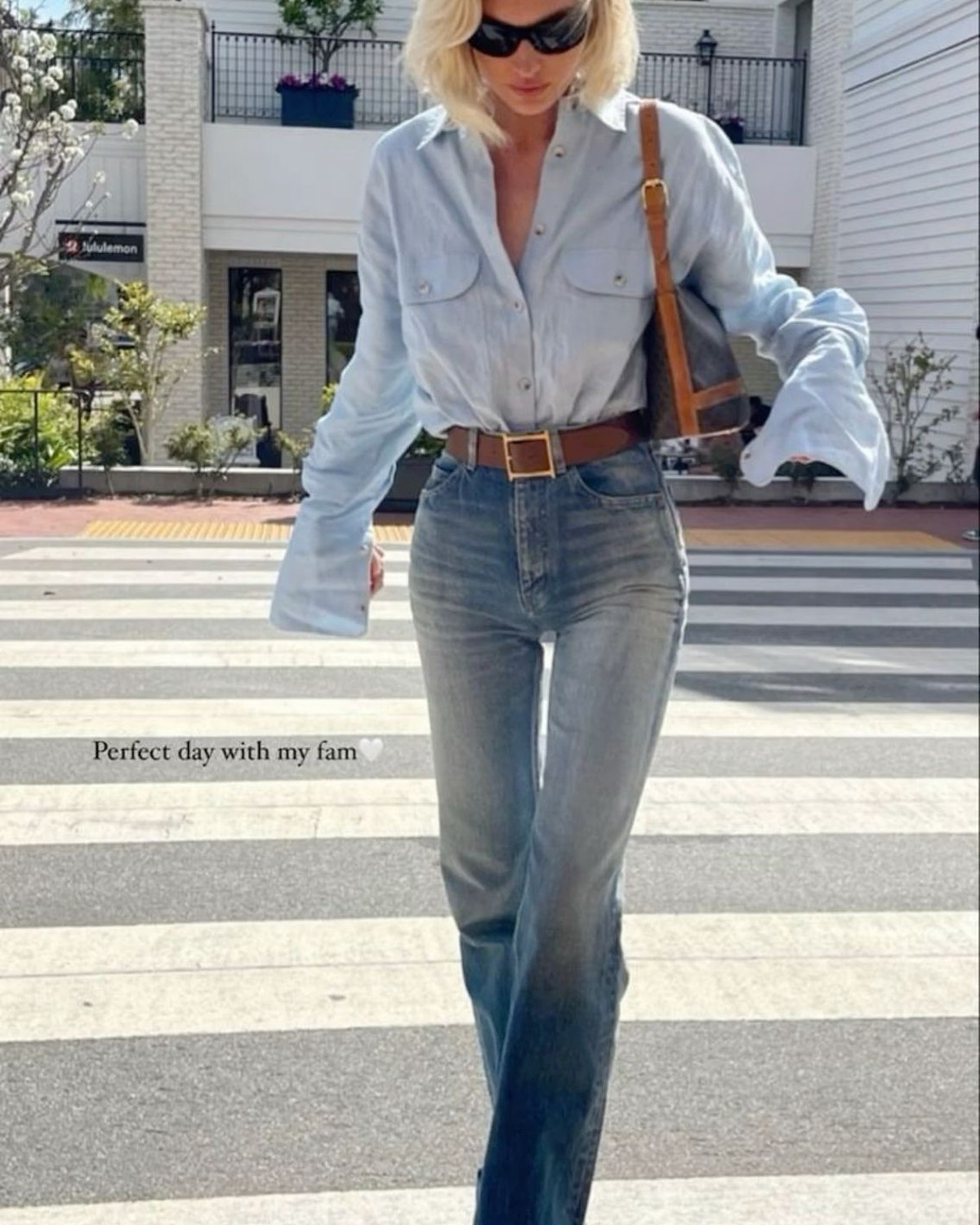
When you compare womens high rise jeans, check the waistband while seated as well as standing, then note where the hem lands with your usual shoes. A straight leg often lets a top take more volume; a flare can make a shorter jacket feel balanced. What I would skip is buying into a loose or rigid description without considering the rise itself. If you wear a belt, see whether the loops line up with the belt you reach for and whether the top still sits comfortably after a few minutes of moving around.
Straight through the middle
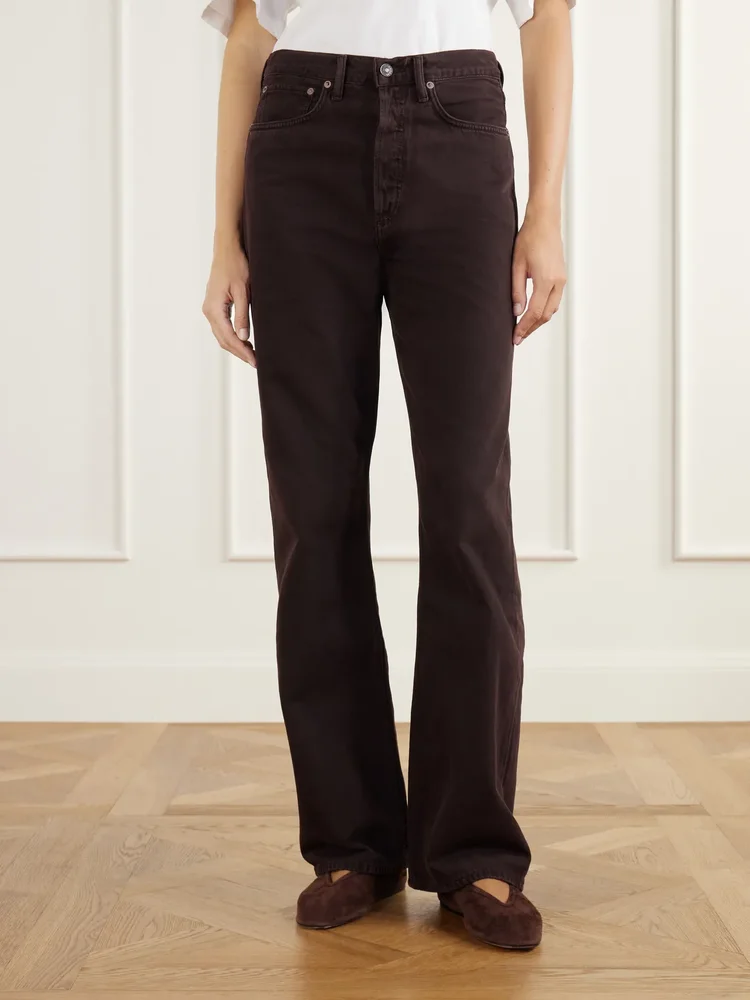
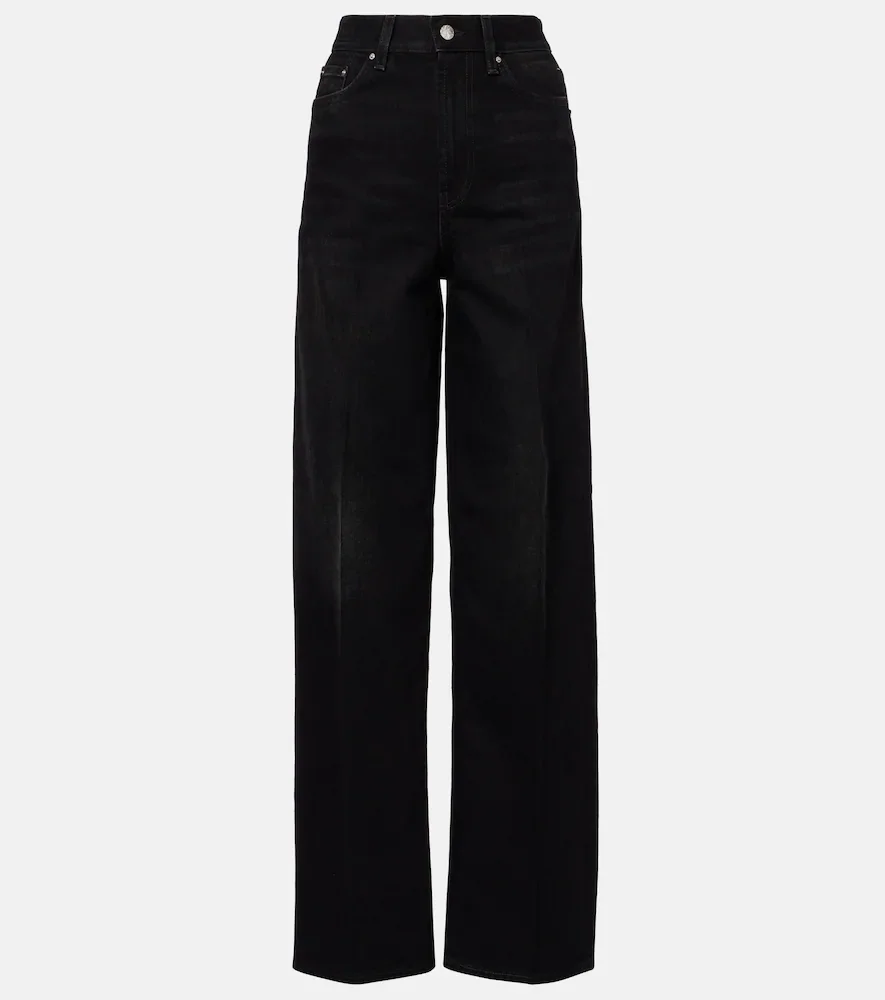
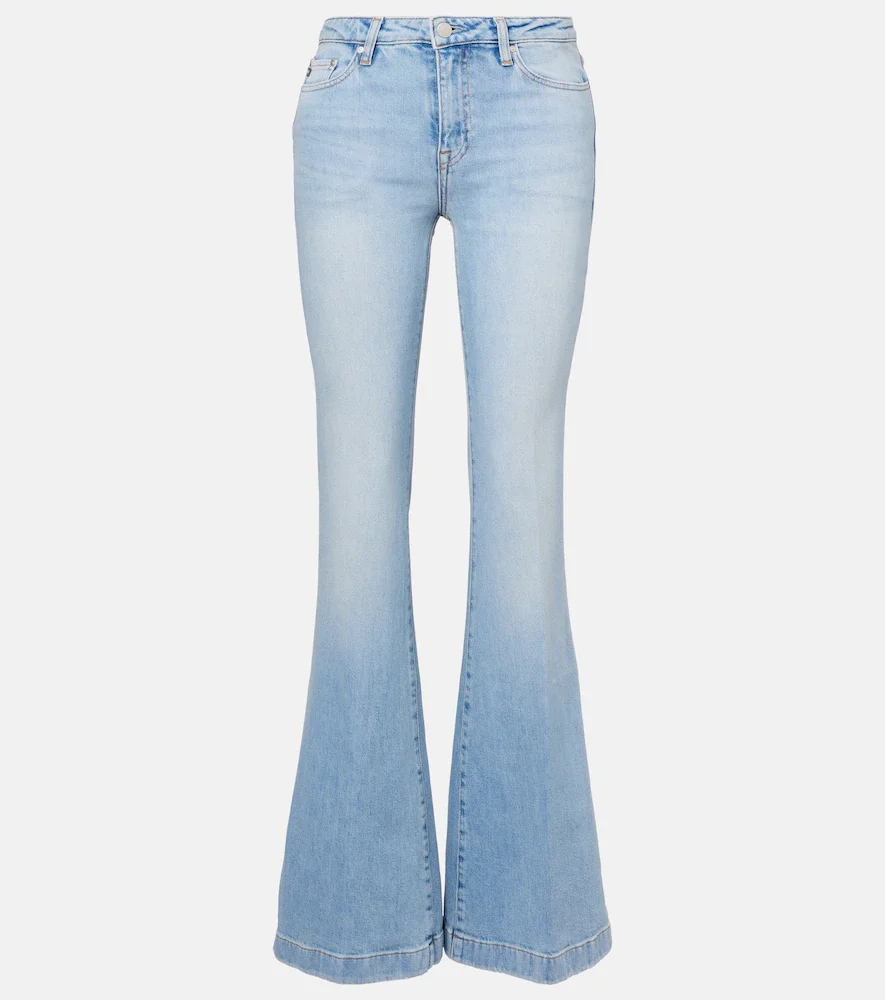
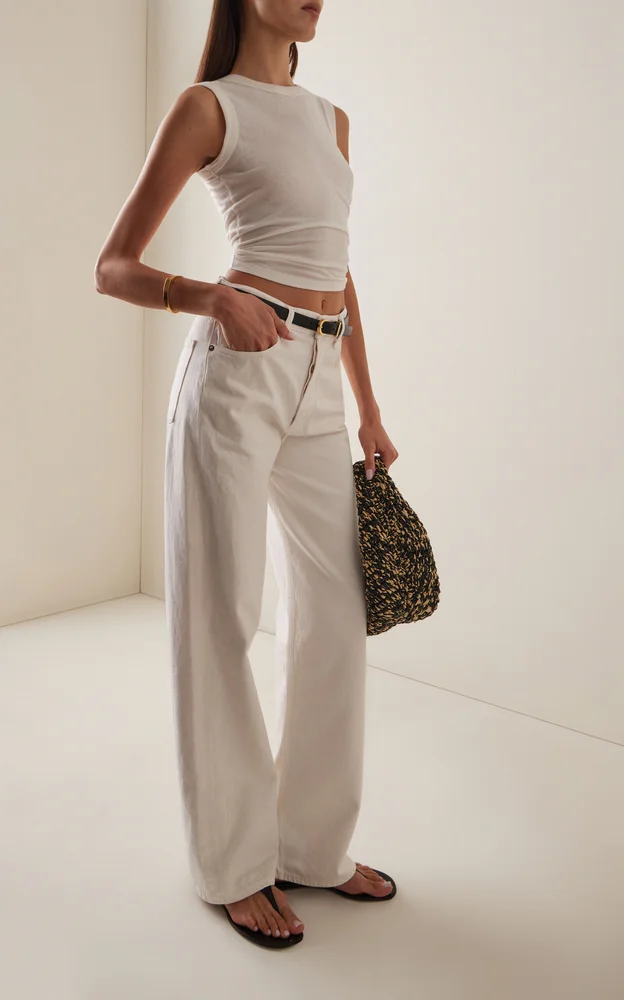
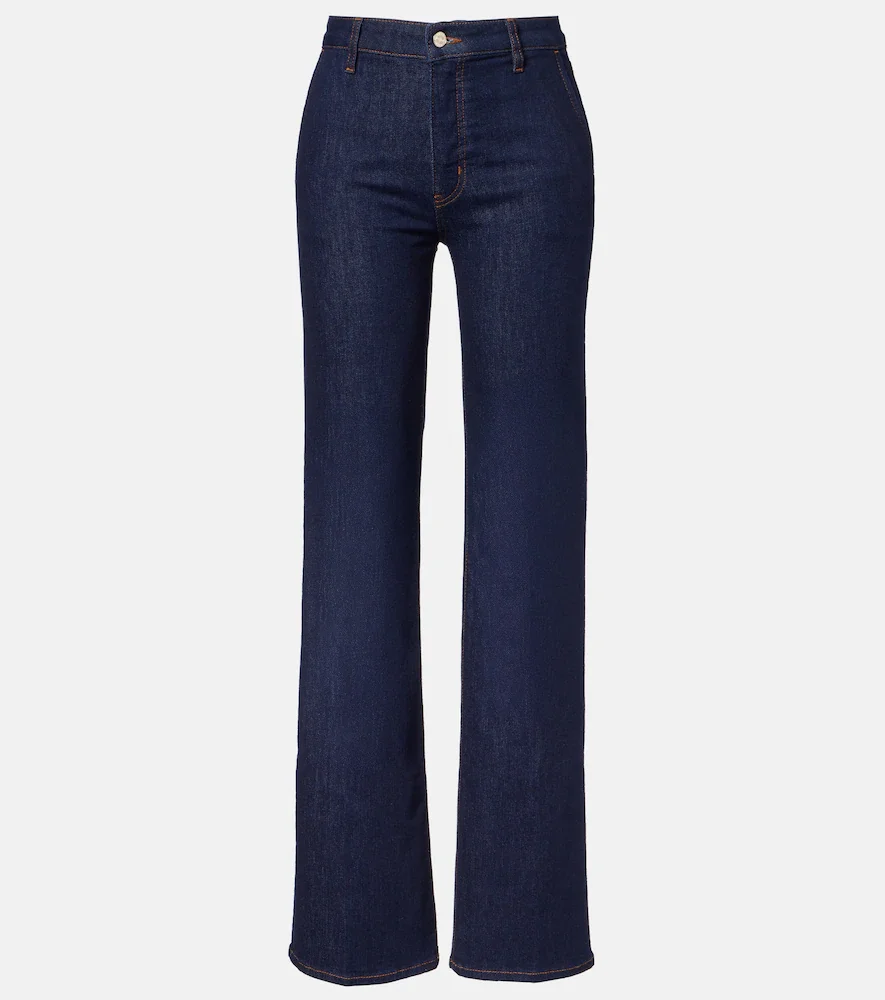
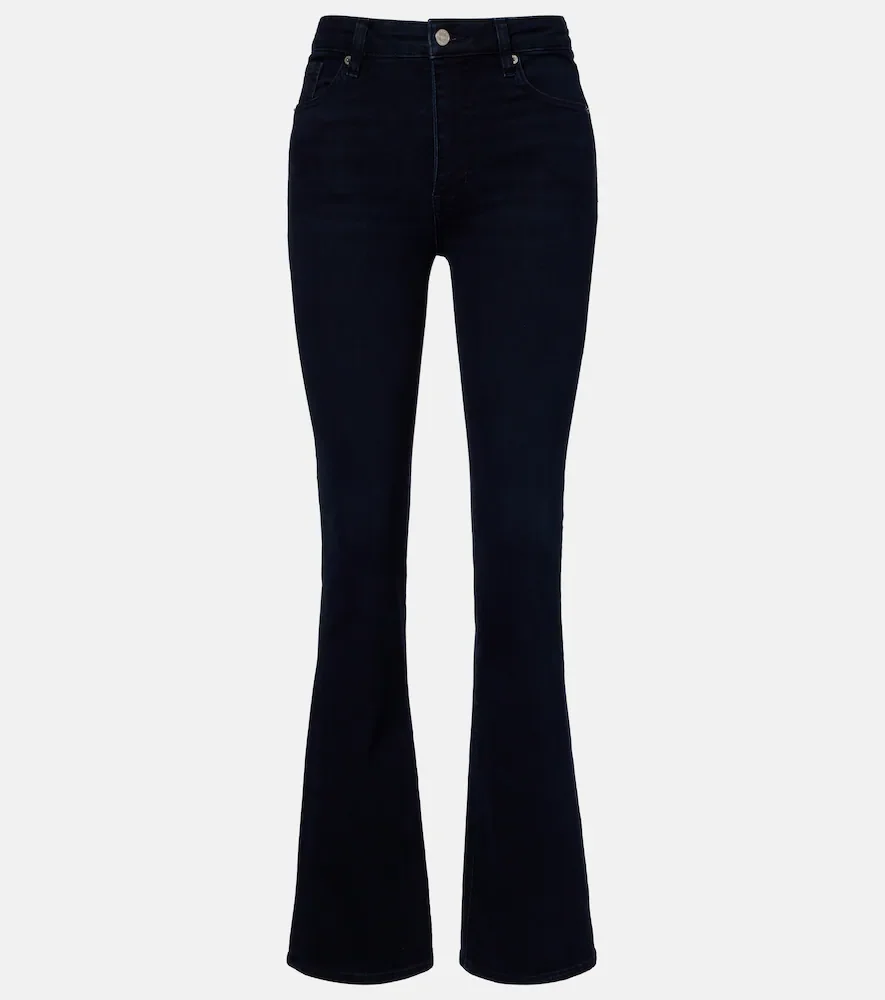
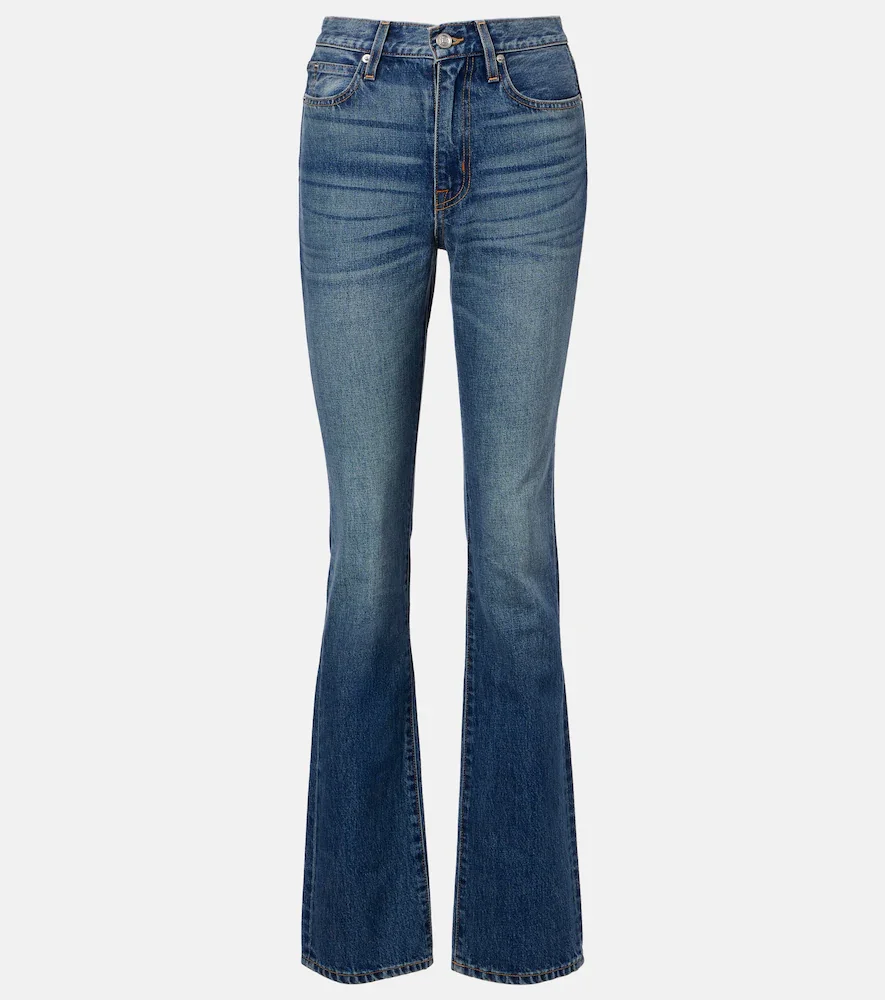
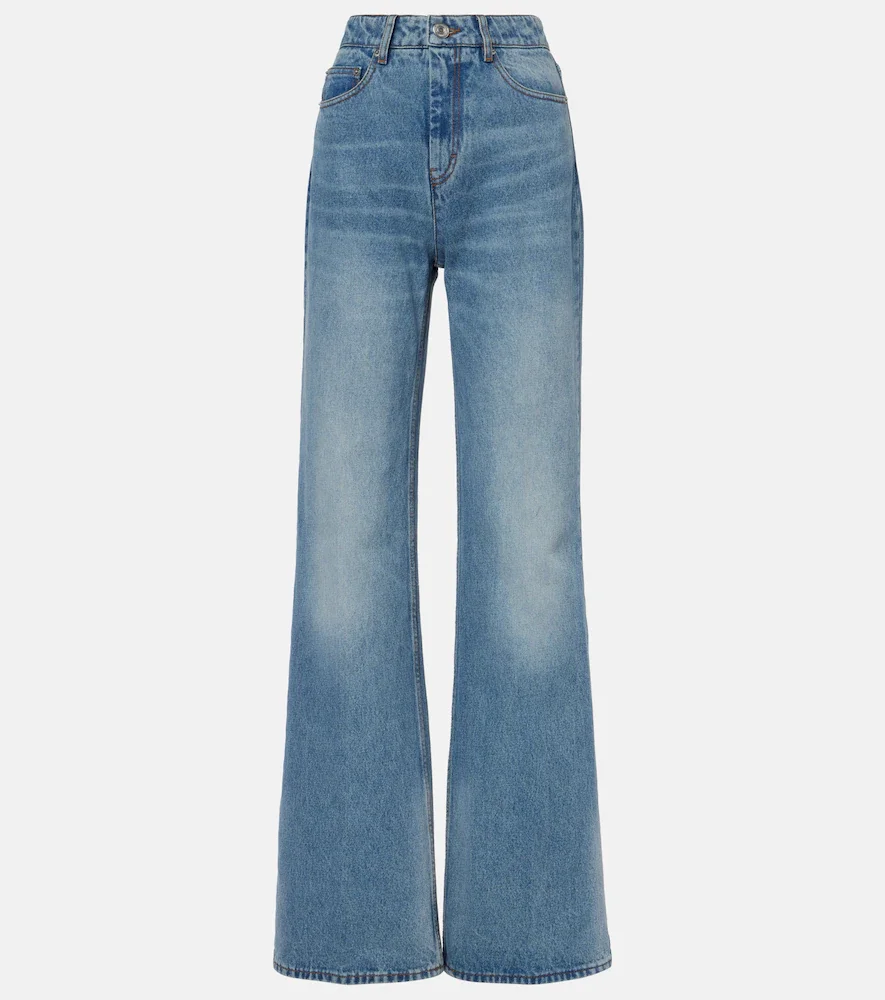
The final grid moves from a clean straight leg toward more movement at the hem. Frame High-rise straight jeans make the simplest comparison, while Frame Reboot high-rise bootcut jeans add a small outward shift below the knee. SLVRLAKE Jade high-rise bootcut jeans repeat that bootcut idea from another label, and Ami Paris High-rise flared jeans take the leg farther outward. If you are choosing between womens high rise jeans by silhouette, these four are a good reason to look past the waist alone.
Try the straight pair with a close-fitting top and the bootcuts with a slightly shorter jacket, then see which proportions feel natural when you walk. Check that the hem meets the shoe without dragging or gathering awkwardly. What I would skip is choosing the biggest flare just because it reads dramatic on a hanger; the line has to work with the shoes and tops you already wear. A rise you like and a hem that clears your footwear make a more useful combination than any one shape word. See the full outfit in motion, too.
Start at the waistband
The waistband is the steady point across all three grids. From tapered to straight, wide leg to flare, womens high rise jeans can change the whole outline without asking you to change how you get dressed. Vogue's 1970s denim story is a reminder that jeans have always moved between everyday wear and fashion's larger conversations, but the fit decision still happens on your body and in your routine.
I would start with the top you wear most, then compare the waist and leg against that familiar proportion. If a tucked shirt feels secure and the hem works with your shoes, you have a practical answer. For a softer outline, give the wide-leg shapes a try; for a more defined line, compare the tapered or straight pairs. Choose the pair that lets you sit, walk, and reach without thinking about the waistband every few minutes.