A white skirt edit moves from polka-dot minis and lace to cotton tiers, pleated midis and cooler-weather knits. I would choose the shape by hem, waistband and the day ahead, not by a calendar rule.
White Skirt: A 1911 London Drawing With Seaside Pockets
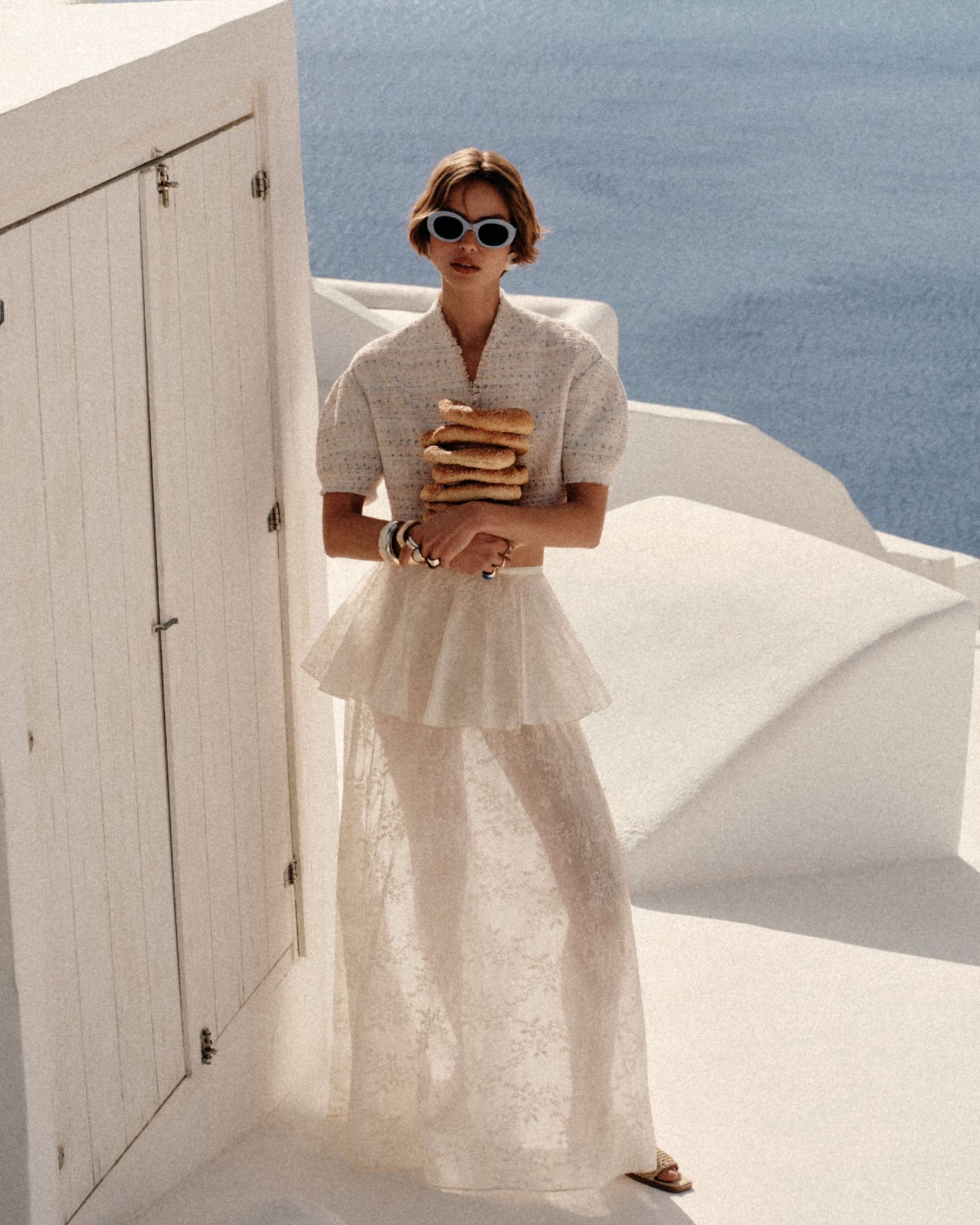
A white skirt by the water
In London in 1911, Elizabeth Handley-Seymour drew an easy-fitting striped jacket with a slim white skirt and pockets. The V&A says it could suit a day at the seaside or in the countryside. I like the practicality of that picture: a white skirt belongs to movement and weather as much as to a resort postcard.
White has never been just blank or bridal. Before air conditioning, it was one way people stayed cool; around the turn of the 20th century, Gilded Age families decamped to Newport cottages and wore summer clothes, often white. That mix of heat and leisure explains the color's long summer association better than any old calendar rule. Resort and beach clothing then became its own widely marketed category in the 1920s and 1930s, when the vacation wardrobe was planned as carefully as the destination.
The opening picks let me make the story personal instead of precious. The Maelys mini has fine polka dots and a flared A-line; the lace-ruffle mini and crinkle-gauze tiered mini give the same short length two distinct textures; and Kenneth Cole's pull-on mini is the clean, pure-white counterpoint. I would wear the Maelys with a plain tee and flat sandals for coffee, then move to the tiered mini with a fitted knit for a lunch outside. The ecru knit midi and crochet midi shift the mood without leaving the pale palette, while the floral-lace midi and eyelet Celine bring a longer hem with a little openwork. My buying check is the lining and the hem in daylight, then the waistband while sitting down. If both feel easy, the shape has room for an ordinary day.
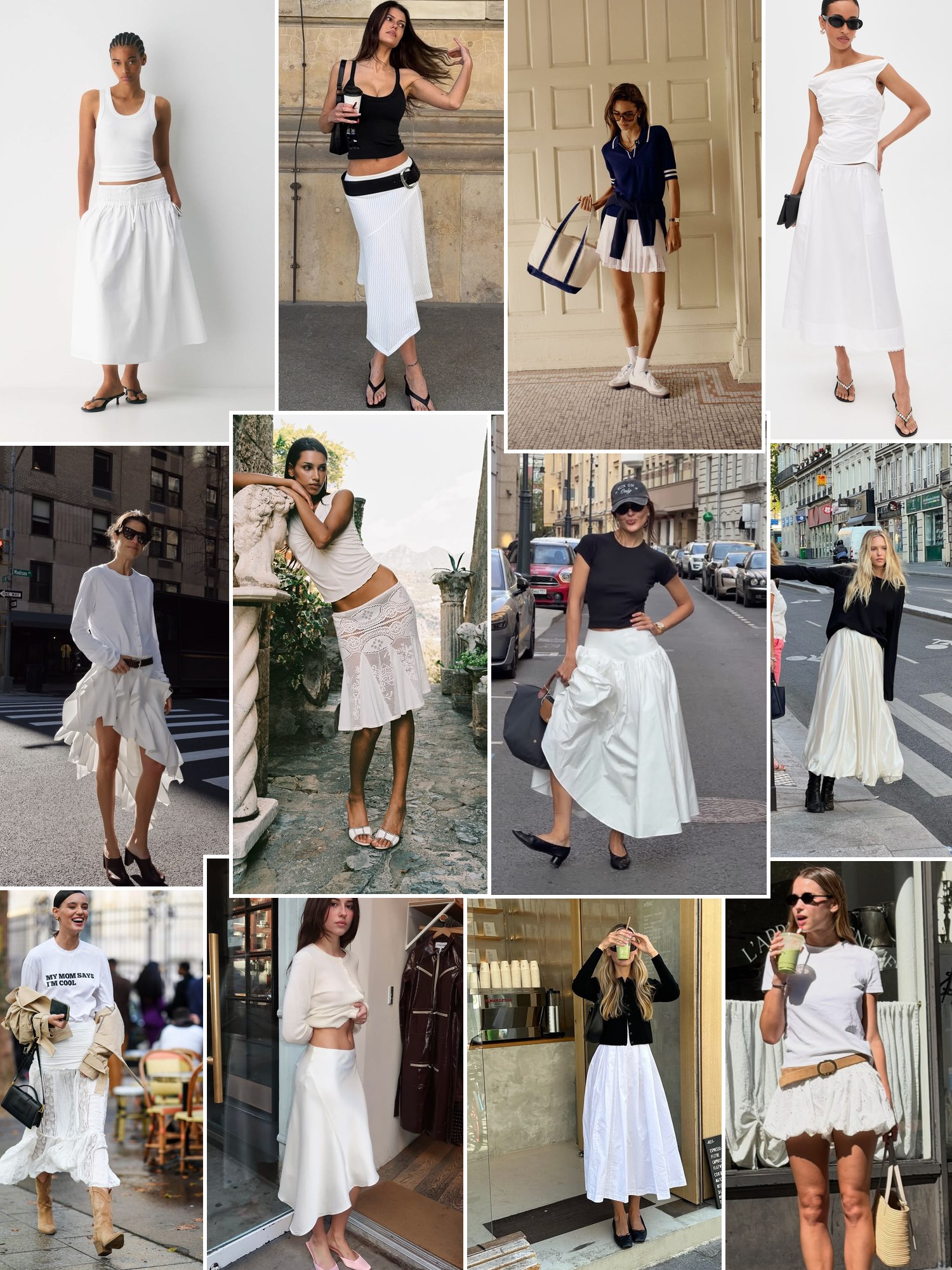


Midis for everyday
A gathered waist is easiest to judge from the side, where fabric tells you whether it will lie close or balloon. The 1855 silhouettes in fashion records used multiple flounces and underskirt layers to build volume, with a crinoline underneath; I still like thinking of a tier as a piece of construction rather than decoration alone.
The Paneled Waist midi uses a dark botanical print and gathered volume, so I would keep its top simple. The Vanilla Ice crepe column is straight and clean at the waistband, while the Ultra White pleated-hem midi adds small crisp folds below the hip. The smocked tiered midi sits softer through its waist; a white poplin bow skirt has side pockets and enough flare to meet a tucked tee without fuss. The satin maxi has a soft sheen and gathered tiers, while the cotton maxi with soft gathered pleats makes its volume feel airy. The white taffeta maxi holds the fullest shape of the group.
I would pair the column with a fine-gauge cardigan and flat shoes for a normal weekday, or choose poplin with a sleeveless knit for a longer lunch. At the fitting room, I would check the side seam and waistband after sitting, then see whether the pleats recover without a bulky band. What I would skip: if my day is mostly transit and stairs, I would leave the broad taffeta shape for a seated plan and reach for crepe or poplin instead.


Maxis for evening plans
The dressed-up options work best when the volume is deliberate, not everywhere at once. I would choose a waist with structure or a clean top and let the lower half do the talking.
DÔEN launched in 2016 with Santa Barbara-born sisters Margaret and Katherine Kleveland and a collective of women; its own story points back to the California coast they grew up around. I like that point of view beside the tiered organic-cotton poplin maxi: the shape feels tied to a place rather than a costume.
The black-and-white floral layered maxi gives the group a pattern anchor, while the powder-white Sebastiane and double-cotton tiered maxi make texture do the work. The voile eyelet maxi is lighter in spirit, the pearly-bead poplin maxi has a small evening glint, and the full cotton-poplin midi keeps its volume and pockets straightforward. A crinkled off-white maxi and the ivory satin A-line pull the palette into smoother, quieter shapes.
I would wear the beaded poplin with a compact tank and low sandals, then add a sharp jacket if the plan runs late. In a fitting room, I would check that the waistband lies flat when the skirt is full and that embellishment isn't sitting exactly where a chair edge would catch it.


Details at the hem
In white, the hem can do the work of a print, so I look for a detail with a clear edge. One of the best-known early pleating stories is the Delphos dress, whose 1909 pleating patent credited Henriette Nigrin as the inventor; I like that as a reminder that a fold can be the actual design, not an afterthought.
The Angela A-line is cotton with a wide waistband and discreet pockets. The Sammy midi brings a fine knit and silver buttons; the eyelet mini is all scalloped edge and openwork, while the Delphine's shirred waist feeds into a full, tiered length. The Kirat has a front button placket, and the Italian Summer skirt keeps its white cotton shape clean before the embroidered hem. The long polka-dot skirt is a little more graphic; the lace mini takes the shortest route to texture.
For a day with a book or a long dinner, I would pair the openwork or embroidery with a plain top and let the edge show. My fitting-room check is to walk, sit, and look for a hem that doesn't flip up or a closure that pulls. What I would skip: for a long walk on rough pavement, I'd leave the scalloped lace mini at home and choose the cotton A-line or button-front midi instead.

Pleated Cotton-Poplin Maxi Skirt
RÓHE
$414

Lila Satin Skirt
SAU LEE
$650

Woven Midi Skirt
WARDROBE.NYC
$300

Micro Mini Stretch Skirt
GUIZIO
$78

Briana Wrap Wavy Hem Maxi Skirt
Runaway The Label
$99

Liliana Gathered Silk-Twill Midi Skirt
HEIRLOME
$1,790

Sebastiane Broderie Anglaise-Trimmed Organic Cotton-Poplin Midi Skirt
DÔEN
$230

Jersey Midi Skirt
TOTEME
$560
Texture for cooler days
When temperatures fall, I choose the fabric before I decide which shade of white to keep. The off-white wool fringe midi brings texture without a print, while the brushed cashmere A-line has a compact shape that can sit under a roomy sweater. A cream stretch-poplin bubble skirt makes a different silhouette, rounded at the hem rather than full in tiers; the fine-gauge cotton sweater circle skirt gives a quieter version of knit-on-knit dressing.
The tweed flare is the more textured option in plus sizing, and the vanilla crepe knee-length skirt offers a straighter line with a back vent. I would put the satin wrap next to a long-sleeve tee and opaque tights, then use the rigid-cotton denim ankle skirt with a sweatshirt or a sharp jacket. Each one treats pale color differently: brushed, crisp, smooth, or a little worn-in.
My check would be a daylight color comparison between the skirt and any top I plan to wear, then a waist check with the top tucked in and out. The outline should still read from a few feet away. A scarf or boots can finish the outfit, but I would let the material set the temperature. The best part is having a warmer texture rather than forcing summer cotton into a colder day.

Shay Tie-Detailed Draped Cotton-Poplin Wrap Midi Skirt
KHAITE
$1,680

100% Cashmere High-Waisted A-Line Brushed Skirt
Charter Club
$279

Varda Paneled Cotton-Blend Midi Skirt
ALTUZARRA
$795

Fine Gauge Cotton Sweater Above the Knee Circle Skirt
Lands' End
$55.97

Flared Tweed Skirt
White Mark
$30.4

Draped Metallic Cotton-Blend Midi Skirt
ERDEM
$1,228

Bow-Embellished Satin-Trimmed Lace Midi Skirt
SHUSHU/TONG
$315

Nyla Cotton-Poplin Midi Skirt
PROENZA SCHOULER WHITE LABEL
$450
A skirt for the weekend
I would make the choice in this order: start with the day, decide on a length, then pick the fabric that suits the weather. A short eyelet cutout gets its own moment with a simple tank; a crinkled or cotton maxi needs little but a close-fitting top; a wool or cashmere shape makes sense when I want opaque tights and boots.
I'd keep the bright shades near natural light before choosing between pure white, soft white, ivory, or cream. The point isn't to match every shade exactly. Handley-Seymour's London drawing already put pockets on a summer skirt in 1911. That's the version of the old seaside idea I would keep: useful, light on its feet, and ready to leave the house.
For more outfit ideas: Denim Outfits for Women, Sweaters, Black Leather Jacket, Cowboy Boots for Women.