How to wear a shawl comes down to five decisions: shape, fiber, pattern, print, and silhouette. I like a layer that handles drafts without making a speech about it.
The Shawl Edit: Five Lessons in How to Wear a Shawl Without Fuss
A rectangle with range
I have a small ritual whenever I find a generous wrap: within approximately four seconds I am checking its name, its fiber, and whether the fringe has a social life. I keep a layer folded in my tote even when the forecast looks perfectly manageable, because a cold room has excellent timing. It is a low-stakes habit with an impressively large footprint in my bag. I am not embarrassed.
Somewhere between the over-air-conditioned train, the office window that refuses to close, and the urge to carry a second outfit in my tote, a wrap can become an unnecessarily complicated decision. We are told to keep the outfit simple and also to make every layer the interesting part. The fabric is apparently expected to be both supporting actor and lead. A rectangle does not need a performance review.
Which brings me to a small Swiss object from about 1805: the V&A has a gold bonbonnière with Joséphine de Beauharnais painted in profile, wearing a shawl. The useful detail is not that a future empress owned a sweet box; it is that this tiny portrait remembers a wrap as part of how she was dressed. Even the candy container is keeping an archive.
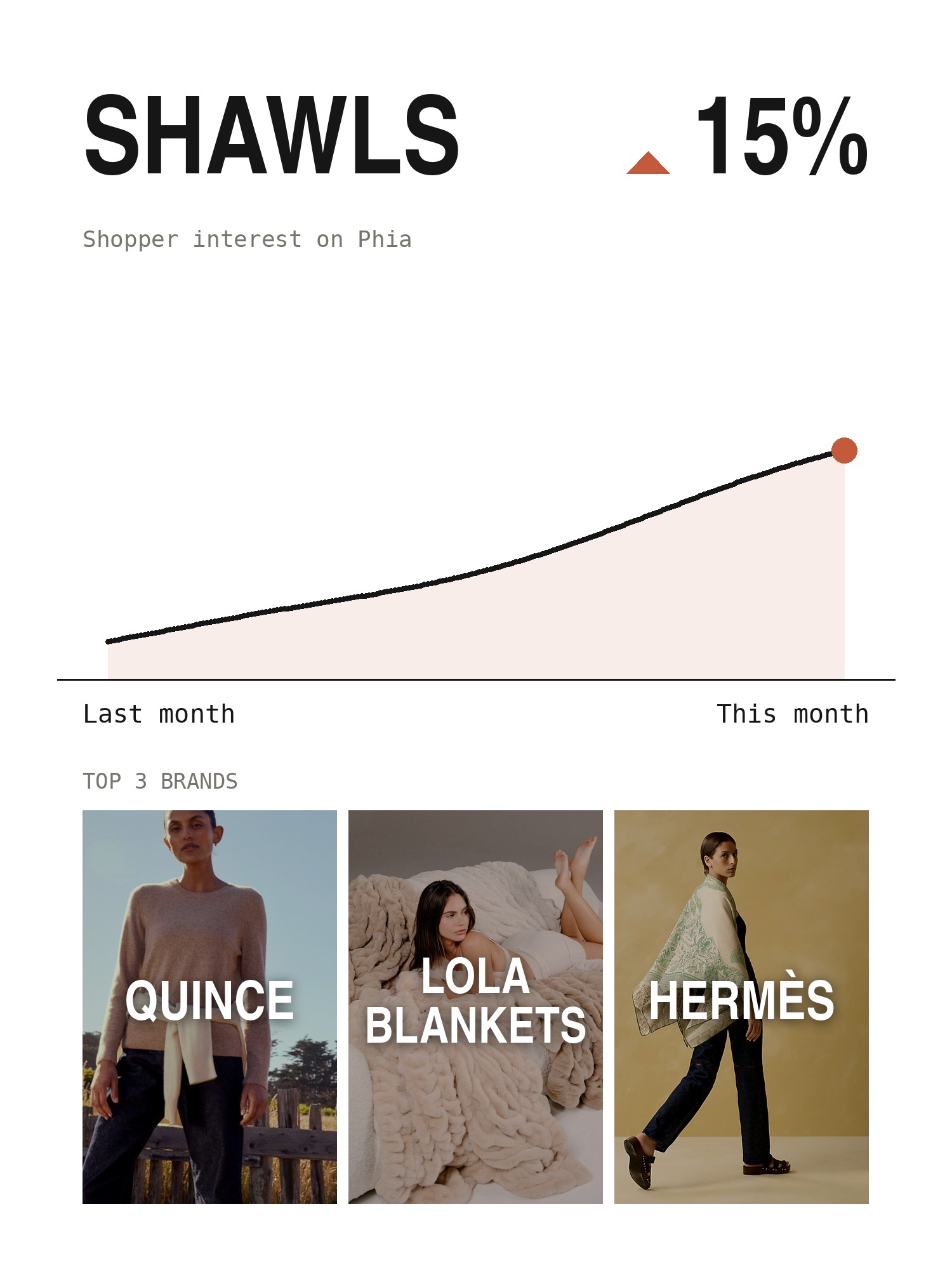
Phia.com shopper data reports shawl interest rose 15% in the last 30 days vs the 30 days before. My own, less scientific case for a wrap is the office vent and the five minutes of waiting for a rideshare. For how to wear a shawl, the answer is rarely a knot tutorial. It is proportion, a little intention, and one layer you can keep on after you arrive.
1. A clean line does more than a knot.
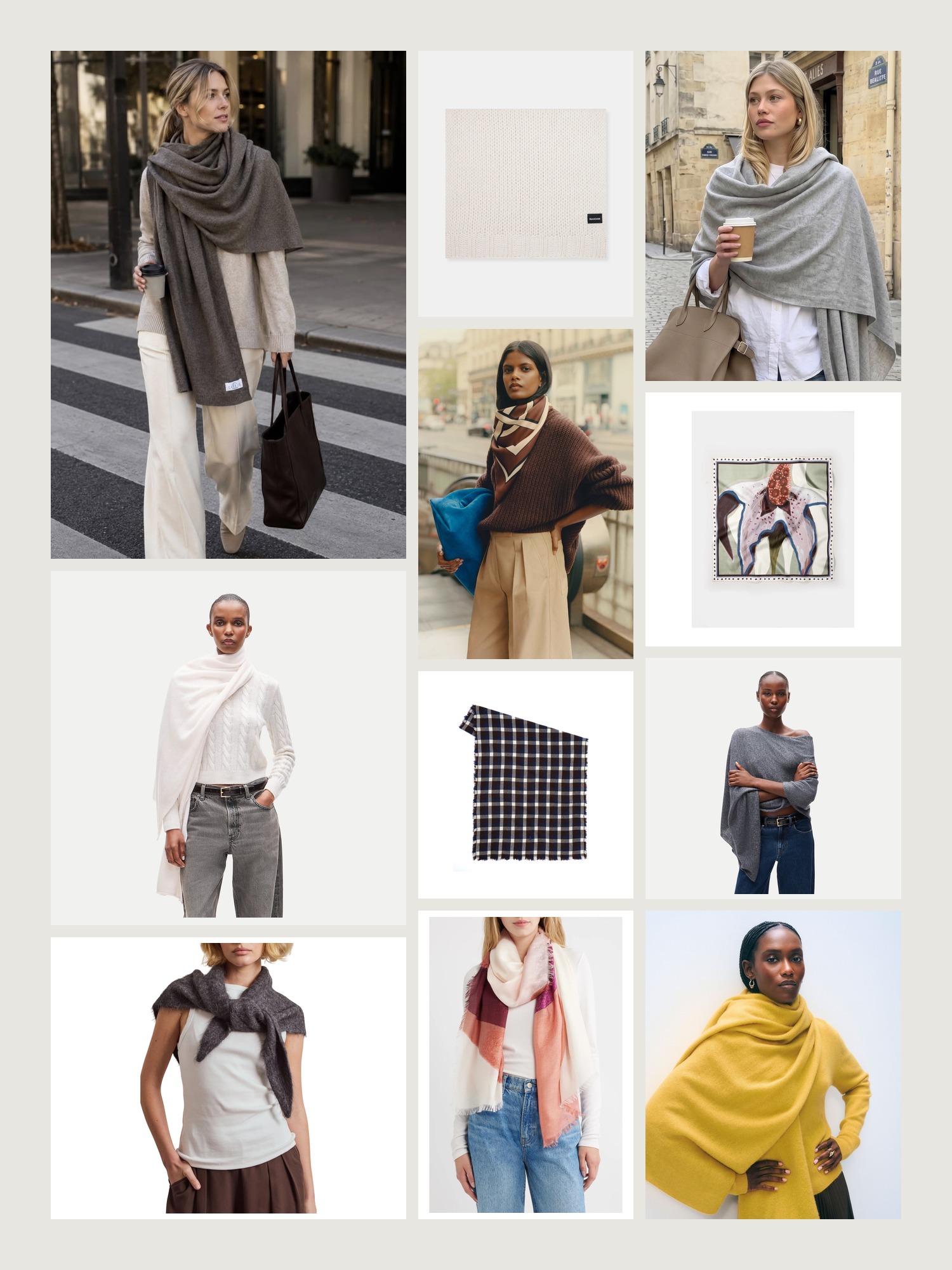
A generous rectangle deserves a clean line before it deserves a clever knot. If you are figuring out how to wear a shawl, start with the shape: the V&A's early-19th-century Spitalfields wrap was described as a light layer for simpler muslin dresses, indoors or outdoors. That is still a useful brief for a modern outfit: warmth, color, no complicated instructions.
Quince Mongolian Cashmere Wrap brings oatmeal to a straightforward rectangle; J.Crew Oversized Cashmere Wrap is an ivory field; White & Warren Cashmere Travel Wrap is antique gold and 81 by 36 inches; Kinross Cashmere Triangle Wrap makes the point and fringe the shape. Haven Well Within Cashmere Wrap is a broad black option, while Portolano Lightweight Cashmere Striped Wrap adds a brown-and-white line.
For a long rectangle, put the midpoint at the nape, bring both ends forward, and let one fall a little longer. Do the practical test in your coat: raise both arms, then sit down. If the fabric hikes up or fills the lapel, fold it lengthwise and keep one end shorter. A triangle can sit point-back, with its corners brought forward beneath an open coat.
What I would skip: a double loop when the coat already has a high collar. The calmest layer is often the one that knows where its edge is.
Cashmere wraps and shawls

Mongolian Cashmere Wrap
Quince
$102

Oversized Cashmere Wrap
J.Crew
$228

Cashmere Travel Wrap
White & Warren
$385

Cashmere Triangle Wrap
Kinross Cashmere
$350

Cashmere Wrap
Haven Well Within
$248

Lightweight Cashmere Shawl
Gobi Cashmere
$119

Lightweight Cashmere Striped Wrap
Portolano
$224

Wide Fringe Scarf
Gobi Cashmere
$199
2. Let the fiber set the mood.
Fiber is the first decision, because it changes how much fabric the shoulder can carry. The V&A traces pashmina to the soft under-hair of the Himalayan goat, and notes that the hair came from high-altitude areas to Kashmir for spinning and weaving. Traditionally, Kashmiri women spun the fine yarn and men wove it. A small accessory can have a very long making story.
Quince 100% Pashmina Wool Scarf gives a broad black rectangle a tidy starting point; NAADAM Lofty Alpaca Scarf is white and long; Reformation Emma Baby Alpaca Blend Triangle Scarf turns the proportion into a point; Voz Lineas in Baby Alpaca is handwoven in Chile. GANNI Wool Lace Triangular Scarf XXL adds a scalloped edge, while Elizabetta Irene Wool Scarf brings blue-and-lavender florals in airy gauze.
Phia.com reports that scarves overall fell 7% over the same 30 days. I would read that as a reminder to choose a layer with a clear job, not as a reason to abandon texture. Put the triangle over a plain shirt, cross the ends once, and tuck them under the coat. The long rectangle can stay open over a jacket.
What I would skip: stacking fuzzy yarn over a high-texture sweater. The practical test is to layer both pieces, then turn your head and lift your arms; if the neck gets crowded, let the softer texture stand alone. Quiet fiber still has a point of view.
Wool and alpaca shawls

100% Pashmina Wool Scarf
Quince
$50

Lofty Alpaca Scarf
NAADAM
$168

Emma Baby Alpaca Blend Triangle Scarf
Reformation
$148

Lineas Shawl in Baby Alpaca
Voz
$395

Oversized Alpaca Blend Triangle Scarf
Arctic Fox & Co
$90

Santo Large Baby Alpaca Blend Fringe Scarf
Loulou de Saison
$410

Irene, Wool Scarf
Elizabetta
$155

Wool Lace Triangular Scarf XXL
GANNI
$270
3. Let one pattern do the talking.
Pattern works best when the rest of the outfit gives it room. The V&A notes that the boteh design, derived from flowering plants, became stylized as Western demand grew; copies appeared in Norwich, Paisley, and France, with increasingly mechanized processes such as the Jacquard loom. I find that history useful. A printed wrap is already carrying several places in its pattern, so the clothes around it can stay calm.
Lauren Ralph Lauren Plaid Ruana brings navy and blue checks into a wide open shape. Barbour Hailes Tartan Fringe Scarf is the classic tartan option; Barbour Blair Tartan Serape has a broader open front; Echo Exploded Plaid Ruana turns the check into black, gray, and cream panels. Burberry Wide Check Wool Scarf carries a post-red line, while LE BOP Plaid Triangle Scarf adds taupe, cream, and red.
To wear a blanket-scale check, keep the shirt or coat underneath in one solid color, then let the plaid sit visibly over the shoulder instead of winding it tight. If two checks are tempting, compare them in a mirror from across the room: one should read first, the other should recede. The ruana can stay open, while the triangle can be folded point-forward and secured with its corners under a lapel.
A pattern does not need a matching set. It needs a little breathing room and a willing shoulder.
Blanket scarves and plaid wraps


4. Fringe is a frame, not a plan.
A small finish can make a printed layer feel considered without turning it into a costume. The V&A describes an early-19th-century Spitalfields wrap as adding color to lightweight muslin and working as a light layer inside or out. I like the usefulness of that sentence more than any elaborate styling rule: a print can brighten the coat you already own.
Echo Wildflower Crinkle Silk Wrap has scattered flowers over black; Echo Falling Flowers Wrap shifts to a chambray ground. Alas Hand-Rolled Floral Silk uses original garden artwork and a hand-finished edge. Kinross Cashmere Ombre Reef Print Scarf picks up Pacific blue, while Elizabetta Genevra chiffon and Elizabetta Regina silk twill move from blue-gray florals to a pearl-black botanical print.
The practical test is simple: lay the wrap against the top you plan to wear, find one color they share, and make that the only conversation between them. Drape one corner over a shoulder and let the opposite end cross the front. A narrow fringe can outline the edge; a large print can stay loose. If both the pattern and the jewelry are busy, take one of them away before adding another knot.
A good border is a frame. It should not write the whole plot.
Printed, patterned and fringed shawls

Eyelash Trim Print Cashmere & Silk Wrap
Nordstrom
$99

Print Modal & Silk Scarf
Nordstrom
$45

Wildflower Crinkle Silk Wrap
Echo
$129

Falling Flowers Wrap
Echo
$79

Hand Rolled Floral Silk Shawl
Alas
$160

Ombre Reef Print Scarf
Kinross Cashmere
$190

Genevra Silk Scarf Shawl
Elizabetta
$185

Regina Silk Scarf Shawl for Women
Elizabetta
$185
5. Let the opening do its job.
Ponchos and capes make the silhouette before you add anything else, so I would choose the opening first. Woolmark says to follow the care claim on the garment, and its general wool-washing guidance recommends flat drying after washing. That is a useful rule for any wool layer: the care label gets the final word, especially when a piece is a blend.
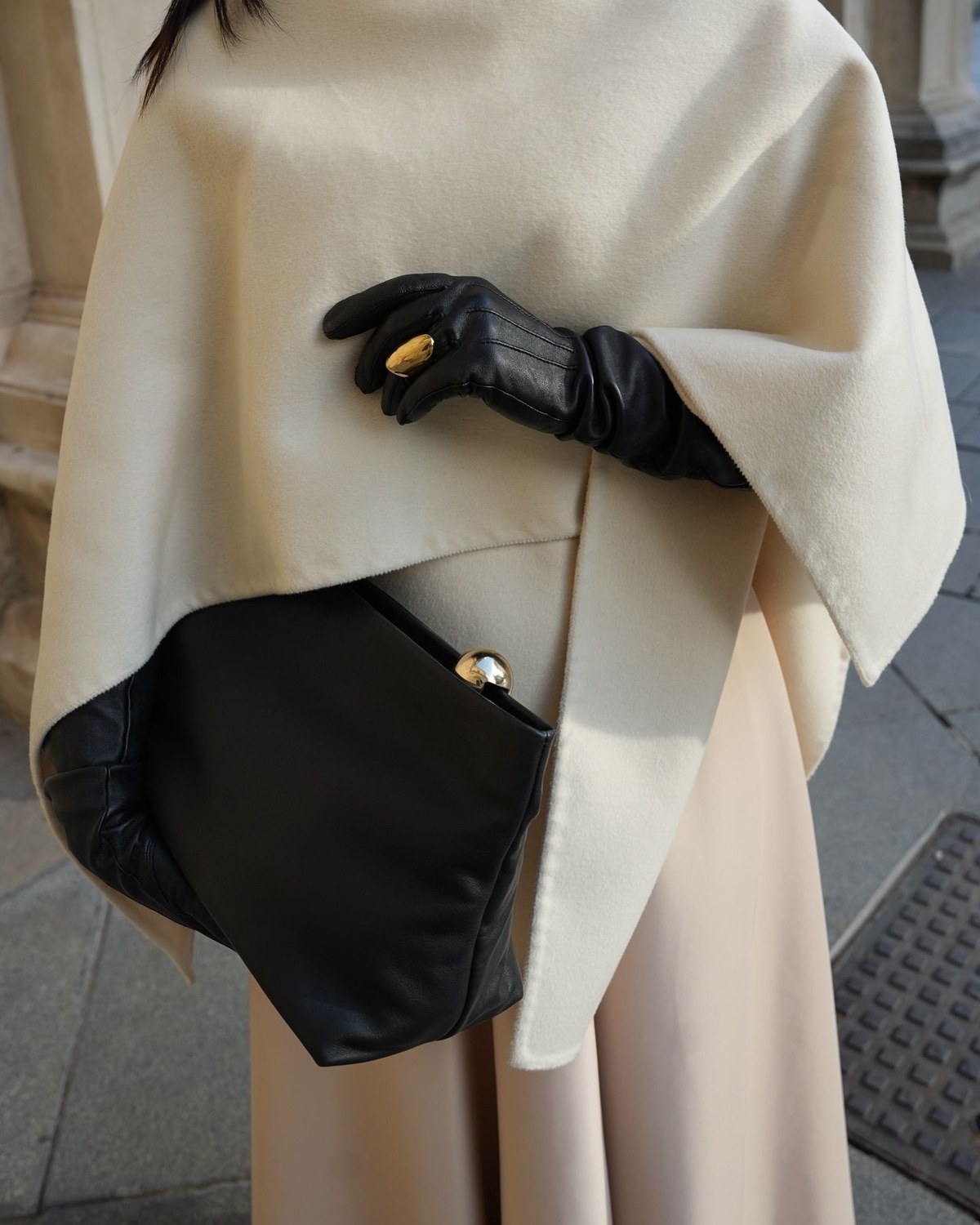
Free People Phoebe Poncho has a charcoal body, high neck, and wide sleeves; J.Crew Cashmere-Wool Blend Poncho keeps the shape open and simple. Cotton On's Softest Poncho is a charcoal knit with an off-shoulder line. Eliza J Furbie Faux Fur Capelet makes a compact collar for a dressier outfit, while the COS Double-Faced Wool Cape adds a button front and patch pockets. SENTALER Baby Alpaca and Wool Cape has a removable sash; Free People Toggle Poncho brings a hood and front toggles.
Try the piece over the actual layers you plan to wear, then carry the bag you usually take. Reach forward, lift both arms, and check whether the opening stays clear. A cape that shifts over the hands may be better over a thin top; a roomy poncho can take a coat underneath. For a dress, keep the closure loose enough for the fabric to fall instead of pulling the neckline out of shape.
The point is not to disappear inside the layer. It is to keep your hands available for the coffee.
Ponchos, capes and shawl-collar pieces


The layer I keep in reach
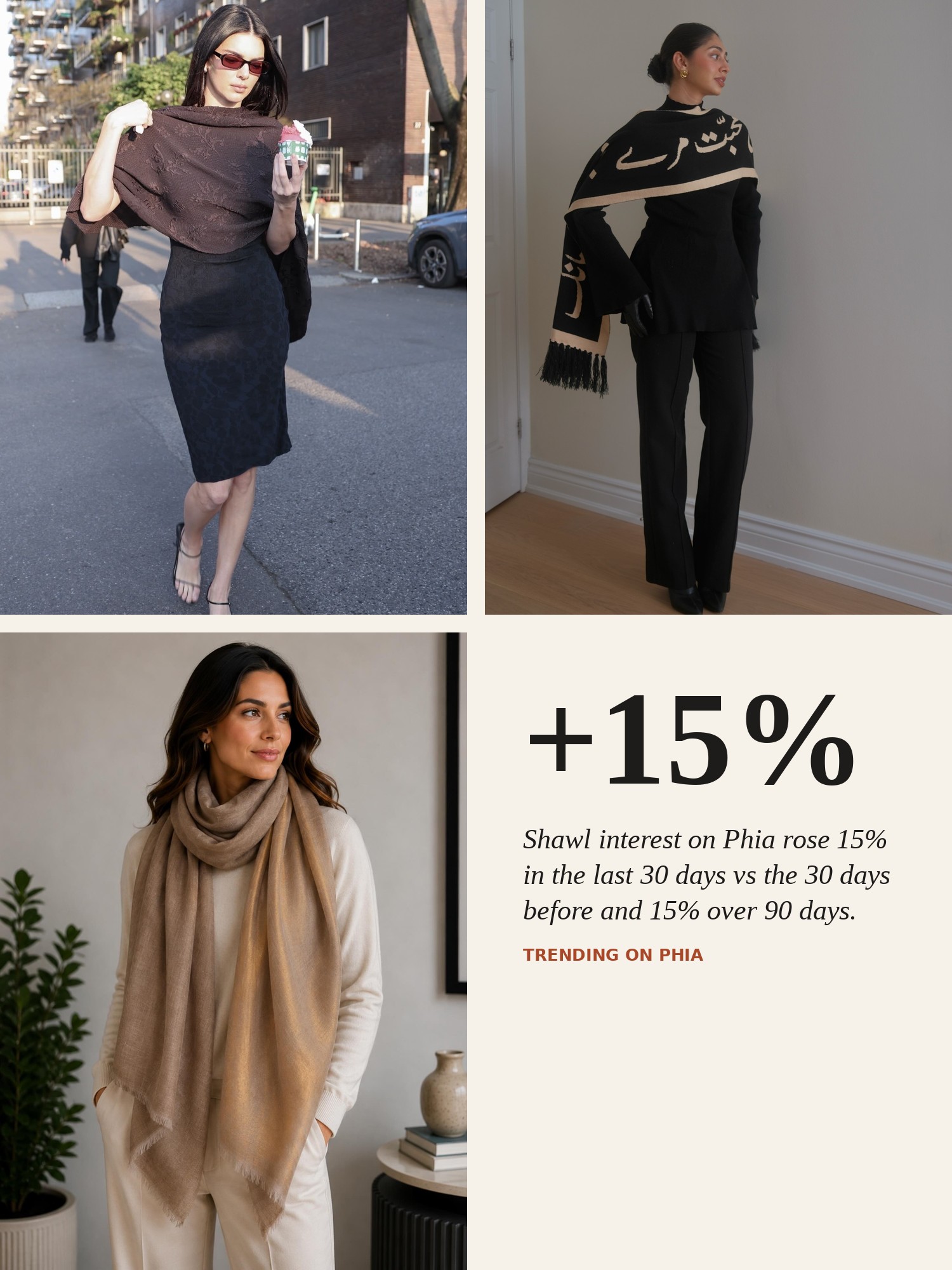
Phia.com reports interest in this category rose 15% over 90 days. A longer trend is a nice excuse to think past one chilly room: an extra layer can bring color, shape, or a little shelter from an overconfident air conditioner. That is enough evidence to keep an extra wrap by the door without turning it into a uniform.
All five lessons land on the same small decision: choose a shape, let one detail speak, and check the care label before the weekly rotation begins. I will still pack one more layer than necessary. The Swiss bonbonnière at least had room for candy.