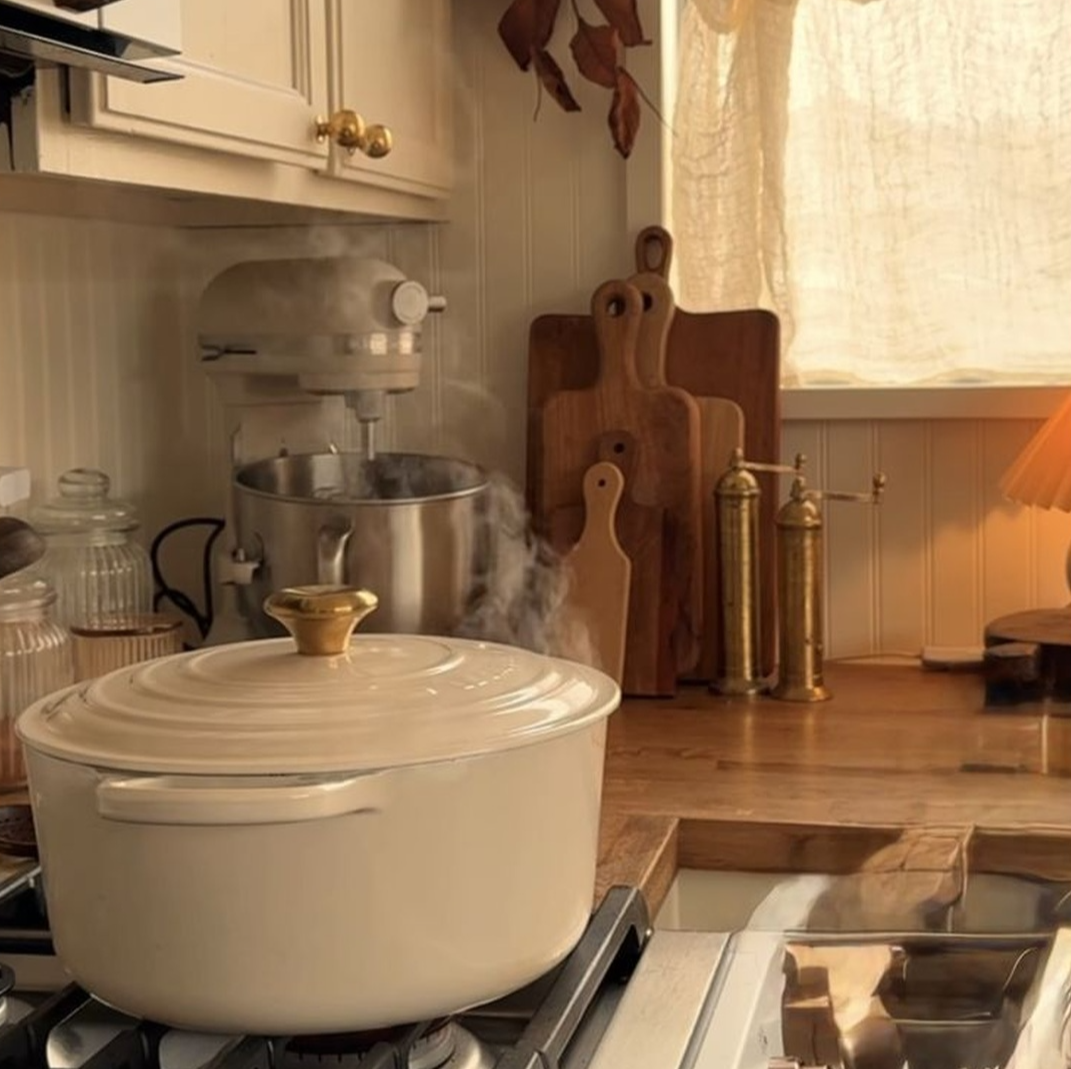
Fall kitchen essentials start with enameled cast iron for soups and stews, pie dishes for every crust and mixing bowls for baking days. I add a few seasonal touches for the table, like a pumpkin cocotte.
Trending this week4.6k
Fall Kitchen: Enameled Cast Iron, Pie Dishes and Mixing Bowls
The pots, pie dishes and table pieces that make slow weekends of baking and braising feel special.
Fall cooking is slow cooking. Soups that simmer all afternoon, braises that make the whole house smell good, pies cooling on the counter while someone pretends not to notice. The right tools make those long weekends easier and a lot more enjoyable. Enameled cast iron is the backbone here because it moves from stovetop to oven to table and holds heat beautifully, which is exactly what stews and bread need. A pumpkin shaped pot doubles as a centerpiece. For baking, a good ceramic pie dish gives you a crisp bottom crust and goes straight onto the table, and a nested set of mixing bowls keeps flour, apples and dough organized. Add a sheet pan with a rack for roasting vegetables and a few seasonal finishing touches, like a dried wreath or a living centerpiece, and the kitchen starts to feel like the heart of the season.
Where To Start

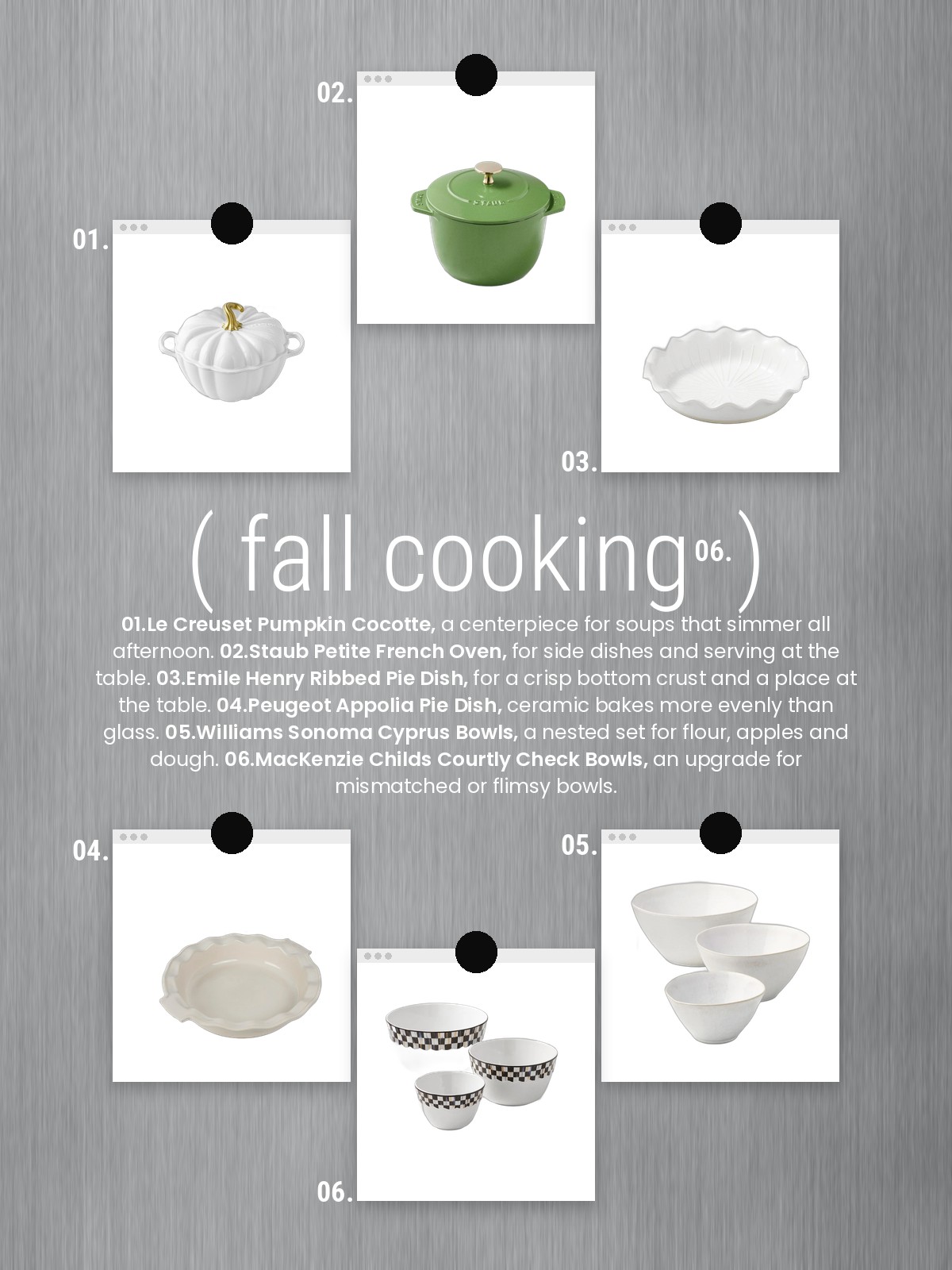
Le Creuset Enameled Cast Iron Pumpkin Cocotte, 4-Qt
Le Creuset
$395

Staub Enameled Cast Iron Essential French Oven, 5-Qt
Staub
$229.95

All-Clad Enameled Cast Iron Dutch Oven, 6-Qt
All-Clad
$159.95

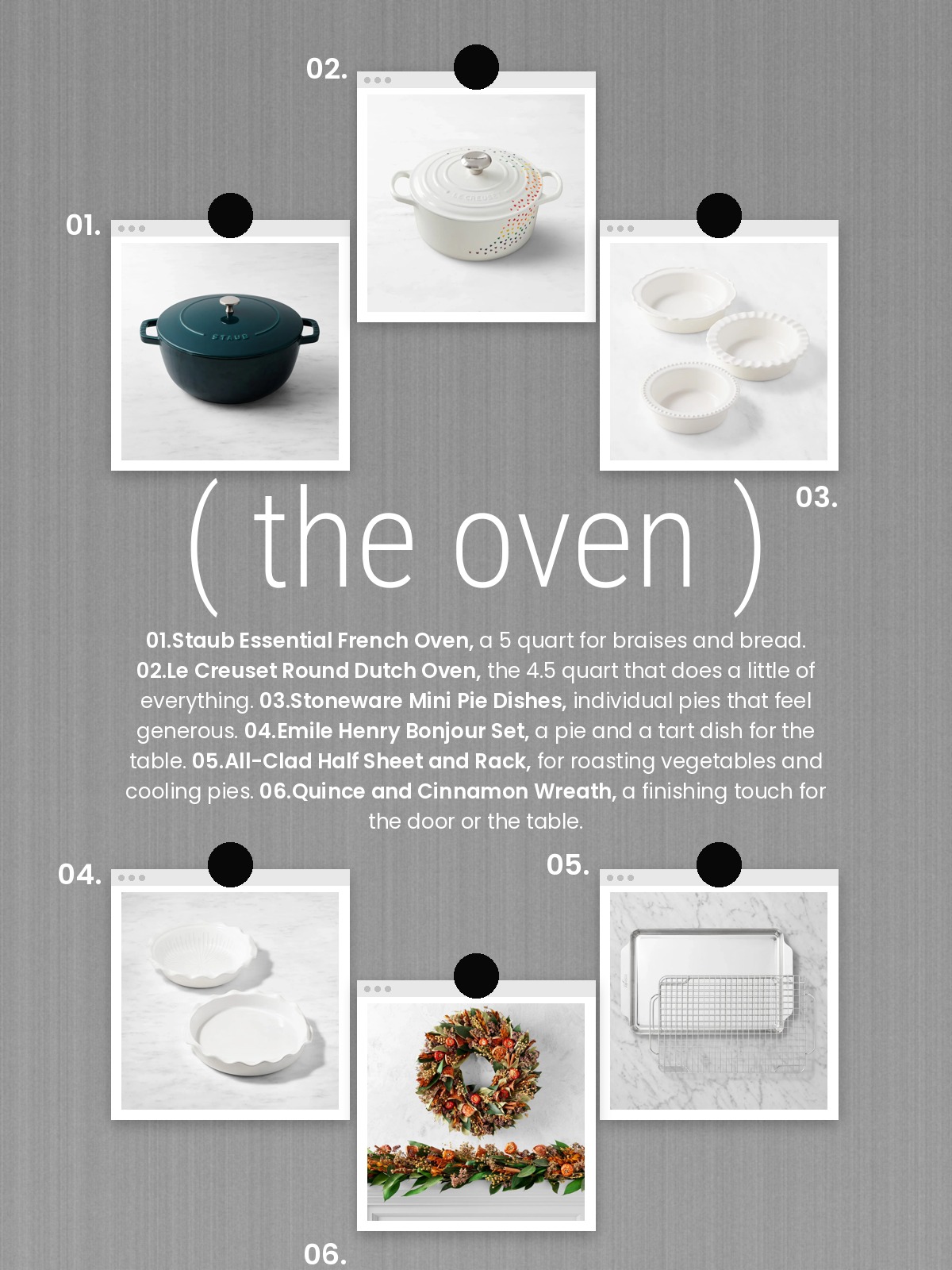
Emile Henry French Ceramic Bonjour Pie & Tart Dish Set
Emile Henry
$99.95

Peugeot Appolia Ceramic Pie Dish
Peugeot
$48

Cyprus Reactive Glaze Mixing Bowls, Set of 3
Williams Sonoma
$99.95

Plaid Lambswool Throw, Grayson
Williams Sonoma
$209

Fall Pumpkin Live Centerpiece
Williams Sonoma
$139.95
If you are choosing just one pot, a round Dutch oven is the most versatile, handling soups, roasts and no knead bread with equal ease. Smaller petite ovens are ideal for side dishes and serving at the table. Ceramic and stoneware pie dishes bake more evenly than glass and look prettier when serving. Mini pie dishes make individual desserts feel generous. Keep a warm throw nearby for the inevitable post dinner collapse on the sofa.
More To Consider

Le Creuset Signature Enameled Cast Iron Round Dutch Oven, 4.5-Qt, L'OVEn
Le Creuset
$435

Staub Enameled Cast Iron Petite French Oven, 1.5-Qt
Staub
$149.95

All-Clad Stainless Steel Half Sheet with Cooling Rack
All-Clad
$149.95

Emile Henry Ribbed Pie Dish
Emile Henry
$69.95

Williams Sonoma Essential Beaded Pie Dish
Williams Sonoma
$49.95

MacKenzie-Childs Courtly Check Everyday Mixing Bowls, Set of 3
MacKenzie-Childs
$199.95

Quince and Cinnamon Stick Dried Wreath & Garland
Williams Sonoma
$139.95

Williams Sonoma Stoneware Mini Pie Dishes, Set of 3
Williams Sonoma
$49.95
Beyond the Dutch Oven
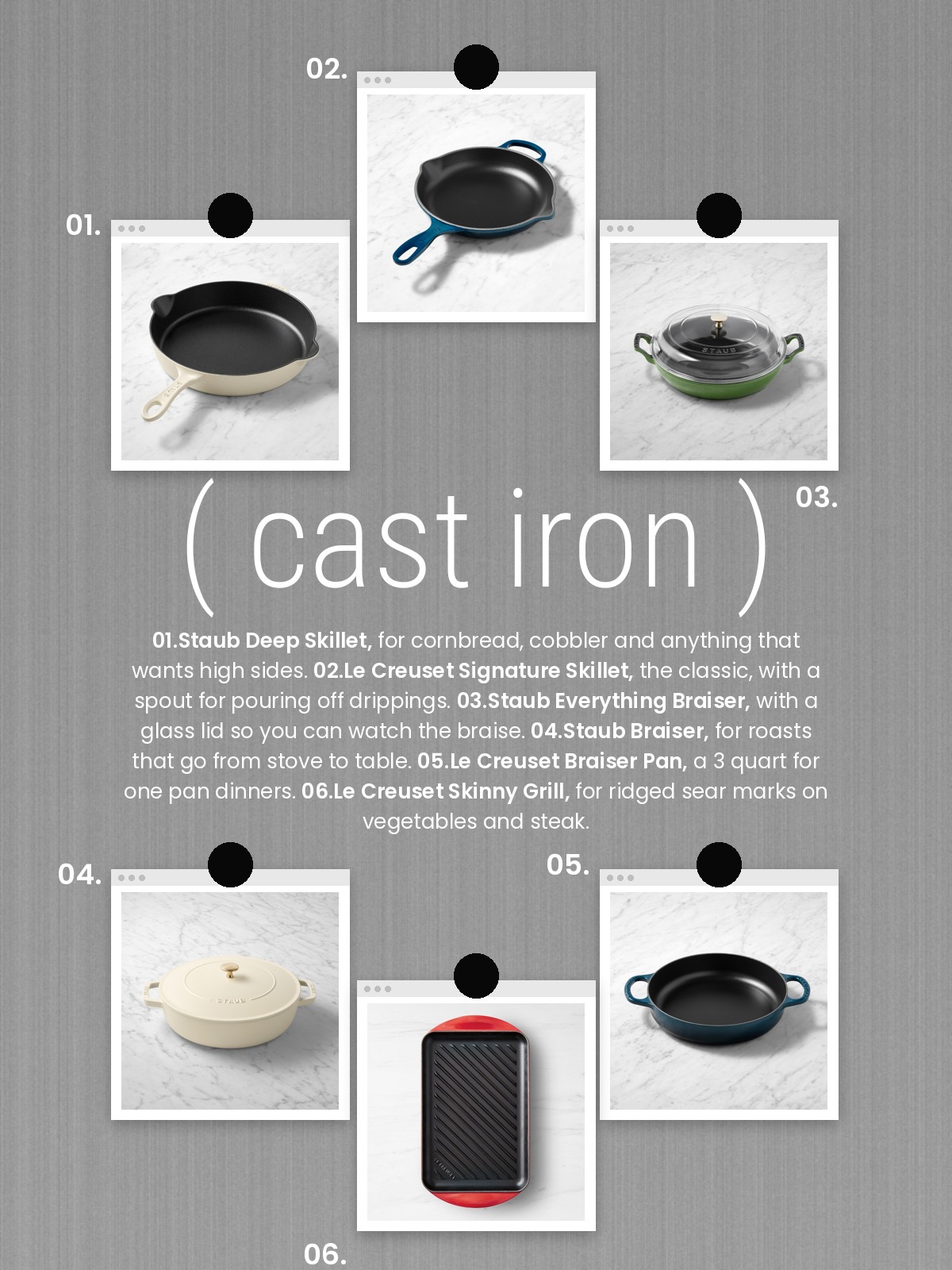
A Dutch oven gets all the attention, but the enameled cast iron I reach for most on a weeknight is wider and lower. A deep skillet with straight sides handles cornbread, a fruit cobbler or a pan of chicken thighs without splattering the whole stovetop, and the Staub and Le Creuset versions here go straight from the burner to the oven. Enameled cast iron has one big advantage over the raw kind: there is no seasoning ritual, and tomatoes and wine do not bother it, so a braise is fair game.
A braiser is the one I would add second. Think of it as a Dutch oven that went on a diet, with a wide base for browning short ribs or chicken in a single layer and a low lid that keeps the juices moving. The Staub with the glass lid lets you check on dinner without letting the heat out, which sounds small until you are three hours into a Sunday braise. The cream and green ones look just as good on the table as they do on the stove.
The skinny grill pan is a smaller bet that pays off in October, when you want sear marks on squash and steak and it is too cold to light the real grill. Practical tip: choose the size by how many people you cook for on a normal night, not on Thanksgiving, because a pan that is too big heats unevenly on a small burner.
What I would skip: a stack of five colors. Pick one skillet and one braiser in a shade you actually like, then let your pie dishes and mixing bowls echo it.
Cast Iron Beyond the Dutch Oven

Staub Enameled Cast Iron Traditional Deep Skillet, 11-Inch
Staub
$180

Le Creuset Signature Cast Iron Skillet Fry Pan
Le Creuset
$240

Staub Enameled Cast Iron Everything Braiser, 3.5-Qt
Staub
$199.95

Staub Enameled Cast Iron Braiser
Staub
$299.95

Le Creuset 3-Qt. Cast Iron Braiser Pan
Le Creuset
$200

Le Creuset Cast Iron Skinny Grill Pan
Le Creuset
$149.95

Le Creuset Signature Deep Skillet
Le Creuset
$280

Lodge Luxe Enameled Cast Iron Skillet, 11"
Lodge
$79.95
What Every Pie Crust Needs
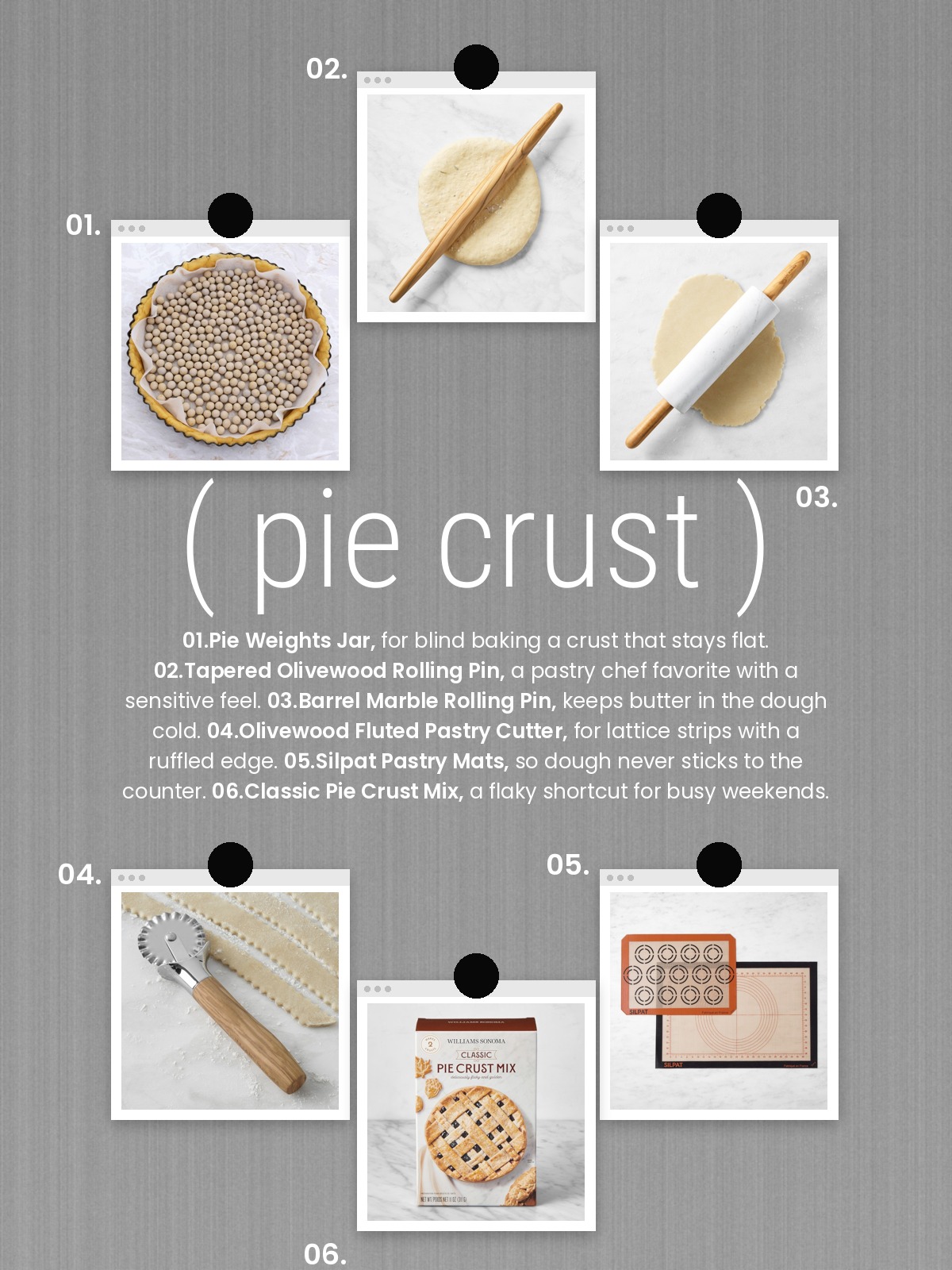
A good pie dish is only half the equation. The crust is the part people remember, and it comes down to a few small tools that are easy to overlook. Start with a rolling pin. I like a tapered olivewood pin for pastry because you can feel the dough through it, and a marble barrel pin for the opposite reason: it stays cool, which helps keep the butter in a crust from softening before it reaches the oven. A classic maple pin is the sensible middle path.
Next come the less glamorous things that make a ceramic pie dish bake properly. Pie weights keep a blind baked crust flat instead of puffing up in the middle, and one jar lasts for years. A silicone pastry mat means the dough does not stick to the counter, so you can roll without reaching for extra flour. A fluted cutter turns leftover dough into lattice strips with a ruffled edge, and the rolling crust cutters stamp out leaves for the top in about a minute.
If it is a busy week, the pie crust mix is a perfectly respectable shortcut. Add cold butter and water and you have a flaky base ready for apples. One practical test: chill the dough for thirty minutes before rolling and you will not need any rescue techniques later.
What I would skip: novelty cookie cutter sets that end up in a drawer. Buy the pin, the mat and the weights first, then let the mixing bowls and the pie dish do the pretty work.
Pie Crust Essentials

Pie Weights Jar
Williams Sonoma
$29.95

Williams Sonoma Tapered Olivewood Rolling Pin
Williams Sonoma
$49.95

Barrel Marble Rolling Pin
Williams Sonoma
$59.95

Maple Rolling Pin
Williams Sonoma
$45.95

Williams Sonoma Olivewood Fluted Pastry Cutter
Williams Sonoma
$24.95

Silpat Nonstick Perfect Pastry Mats, Set of 2
Silpat
$73.95

Rolling Pie Crust Cutter Set of 8
Williams Sonoma
$29.95

Williams Sonoma Classic Pie Crust Mix
Williams Sonoma
$29.9
Where I Would Start in the Kitchen
We think a quality enameled Dutch oven is the most worthwhile kitchen purchase you can make this fall, and it will likely outlive most of your other cookware. Our next pick would be a stoneware pie dish with a fluted edge, since it handles sweet and savory pies and looks lovely on the table. Mixing bowls are an underrated upgrade if yours are mismatched or flimsy. Choose colors you already love in your kitchen rather than seasonal novelty shades. Classic cream, deep red and soft gray will never feel dated. If you want to keep browsing, I also put together The Kitchen Subway Tile Backsplash, Reconsidered and What Is Worth Buying for a Luxury Kitchen.