The best LED face mask is the one whose fit and light settings you will actually use every night, not the one with the most modes. Full-face masks make LED simple by treating the whole face in one repeatable step, while smaller devices split off to treat one area, such as the throat or under the eyes, on their own. This edit compares the full-face options first, then the more targeted tools that work alongside them.
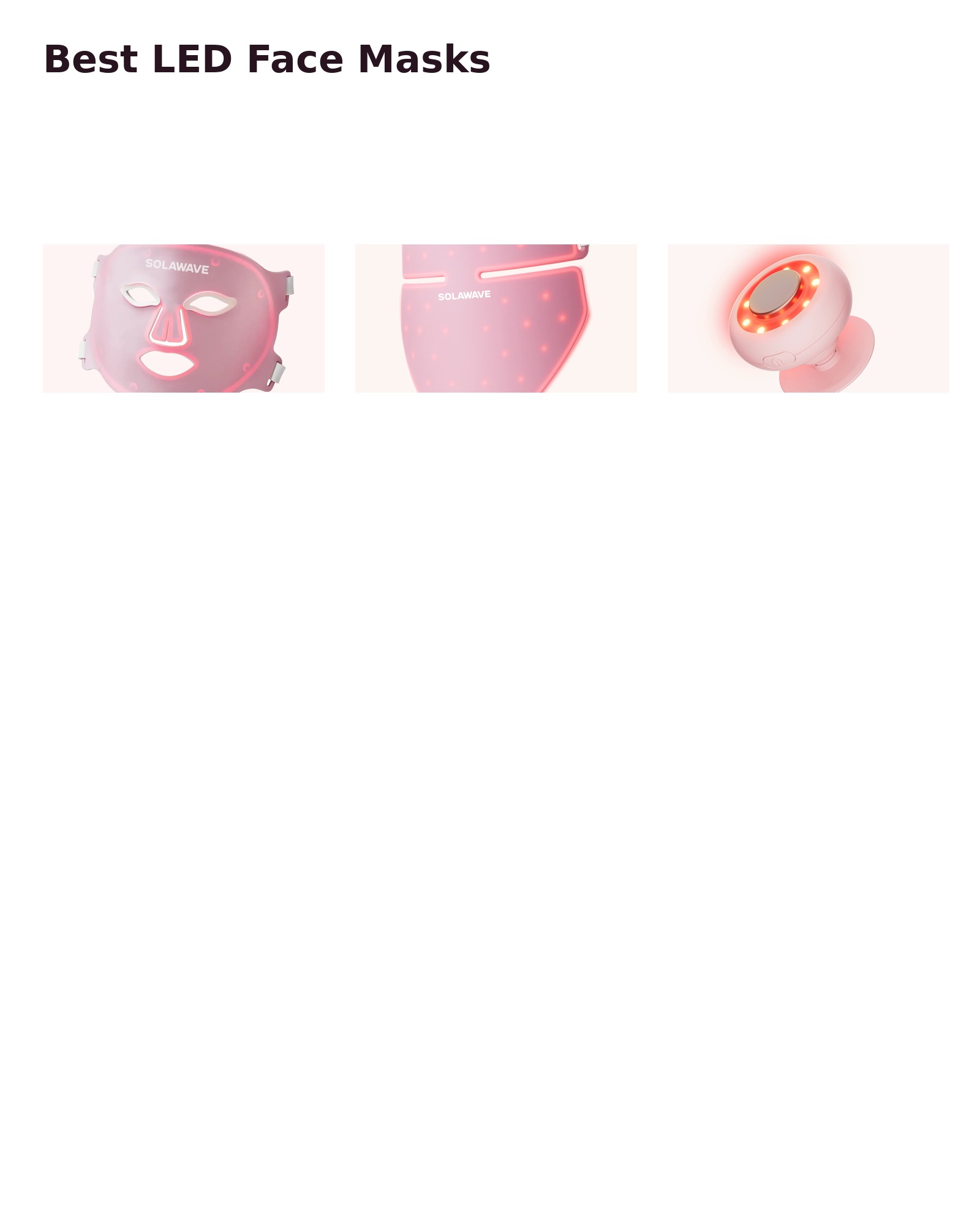
Best LED Face Masks for Home Use, Compared
What matters in an LED face mask
A full-face mask is the most direct way to treat the whole face in one repeatable step, so fit decides whether you actually keep using it past the first week. Look for a flexible design that sits evenly over the cheeks and forehead without pinching around the eyes, since discomfort is the fastest way a routine gets abandoned. Light settings matter just as much as fit, so know whether you are running a general anti-aging mode, a blemish-focused setting, or both before you commit to a session length. Treat any full-face session as a complement to sunscreen and a normal cleanse and moisturize routine, never a replacement for either. Run it on clean, dry skin so the light reaches skin directly instead of through a layer of product.
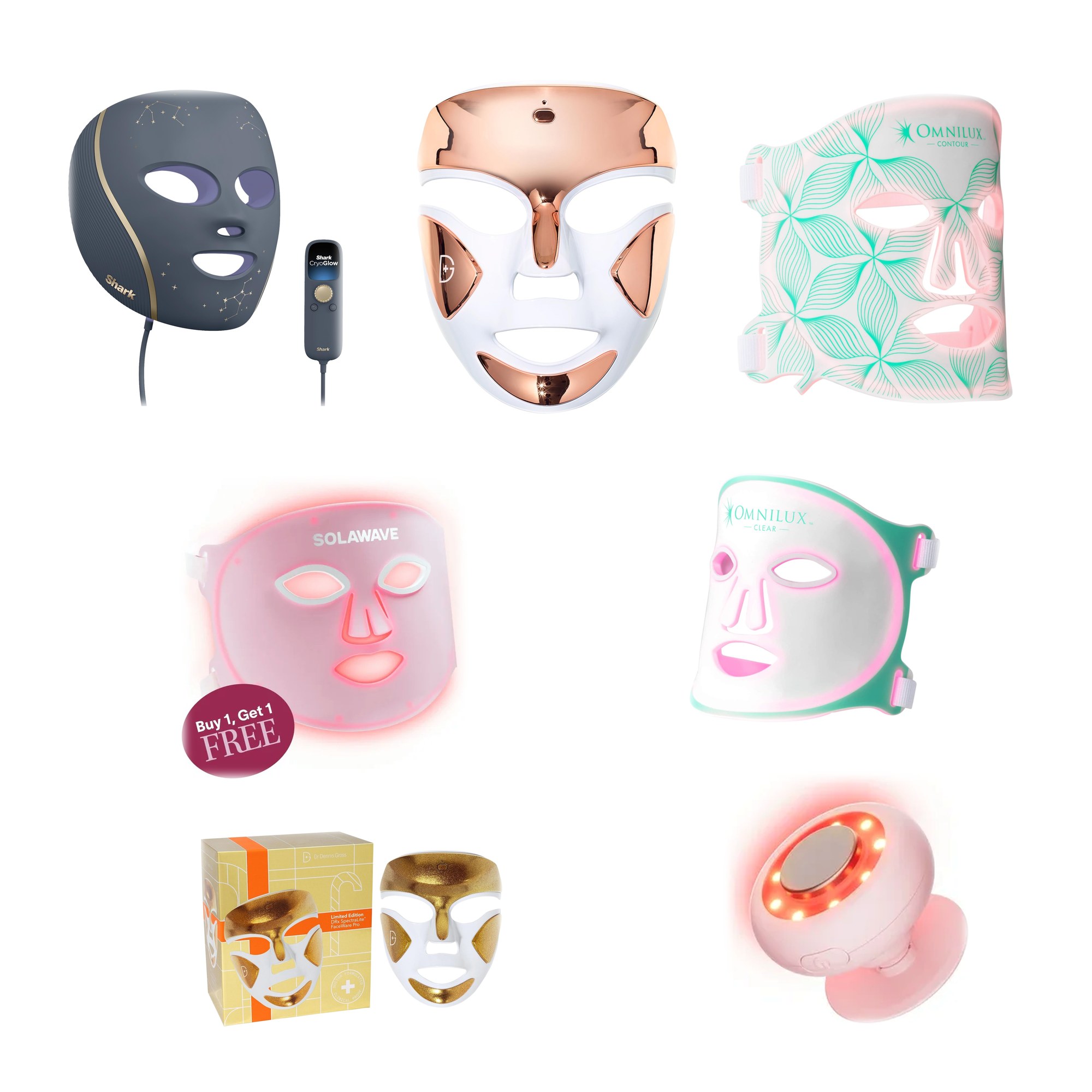

Wrinkle Retreat Pro LED Face Mask with Red, Infrared, Deep Red, and Amber Light Therapy
Solawave
$399

Contour Face Antiaging Red and Near Infrared LED Mask
Omnilux
$249

Clear Skin Blue and Red Light Therapy Face LED Mask
Omnilux
$395

DRx SpectraLite FaceWare Pro 3-Minute LED Device
Dr. Dennis Gross Skincare
$455

LED Red Light Therapy Face Mask: Series 3
CurrentBody
$570

LED Blue Light Therapy Face Mask: Series 2
CurrentBody
$470

LED Red Light Therapy Face Mask: Series 2
CurrentBody
$470

Q-Rejuvalight Pro facewear
Qure Skincare
$249

FAQ™ 201 LED Face Mask
FOREO
$499

TheraFace Mask Glo
Therabody
$380

TheraFace Mask
Therabody
$650

TheraFace PRO Device - White with Gel
Therabody
$420
Formats beyond the full face mask
Light therapy does not have to stop at a full face session to be worth doing. Some evenings call for spending that time on the neck or chest instead, since skin there ages the same way but rarely gets covered by a face-shaped mask. On busier nights, fold a shorter light session into a routine you already have rather than adding a whole separate ritual. The eye area needs its own shorter, gentler schedule, since skin there is thinner and reacts faster to heat and pressure. Treat any of these as an addition to a routine that already includes a full session, not as the first thing you try.

DRx SpectraLite FaceWare Pro LED Device Limited-Edition Holiday Gold
Dr. Dennis Gross Skincare
$455

Neck & Chest Pro Light Therapy Mask
Solawave
$349

Radiant Renewal 2-in-1 Skincare Mini
SolaWave
$119

Shark CryoGlow Under-Eye Cooling + LED Anti-Aging Red Light & Skin Clearing Mask
Shark Beauty
$349

LED 2.0 LightMAX Supercharged LED Mask
MZ Skin
$950

Red Light Face Mask
HigherDOSE
$349

Illumina Face Mask
iRESTORE
$399

LED Face Mask 100
Silk'n
$254
Choosing a mask you will repeat
Start with a full-face mask only if the fit feels comfortable enough that you would actually use it most nights, since comfort decides whether the routine sticks. A general anti-aging setting is the safer starting point, and a blemish-focused light mode makes more sense to add if breakouts are the main concern. Shorter, structured sessions suit a busy routine, but a rigid design will not feel comfortable for every face shape, so try before you commit to a longer session. Targeted tools for the neck or under-eye area make more sense once a full-face habit is already working, not as a substitute for one. Skip anything that hides its light settings or safety guidance, since that information should be easy to find on the packaging. Choose the device whose fit and schedule you will actually repeat, not the one with the most settings.